
Why Some Animal Wounds Seem to Heal Overnight While Others Take Months
Learn why certain animal wounds seem to heal quickly while others require months of care and the science of veterinary wound healing.

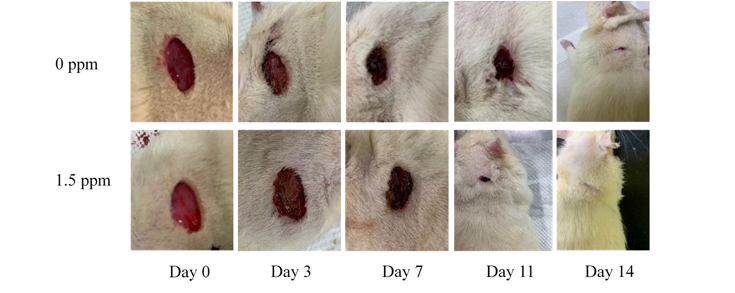
If you’ve ever taken care of an injured pet or treated animals professionally, you’ve probably been surprised at how fast some wounds close up, sometimes in just days, while others stubbornly linger for weeks or even months.
Wound healing is not a one-size-fits-all process in veterinary medicine. It’s affected by biology, environment, species variations, wound cause, wound extent, infection, chronic overall health status, and most importantly, the treatment approach and materials used during care.
Now, one of today’s biggest game changers in consistent, faster healing is the growing use of Extracellular Matrix (ECM) biomaterials, an exciting treatment advancement that helps the body rebuild tissue naturally.
Further studies show that complex wounds in dogs are a recurrent problem in veterinary clinical practice and can compromise skin healing. In this sense, tissue bioengineering focused on regenerative medicine can be a great ally. Decellularized and recellularized skin scaffolds have been developed to be applied to different and complex canine dermal wounds in recent investigations.
The Natural Miracle: How Animals Heal Themselves
Animals are impressive healers. Their biology is structured for recovery because they evolved to survive in brutal environments where wounds often meant death.
Here’s why animals often heal so quickly:
- They have strong innate immunity.
- Their skin is better at shrinking than human skin.
- Fur can help protect against scratches from UV light and irritation.
- Many animals produce growth factors efficiently.
But that doesn’t mean all wounds heal so rapidly. In fact, some wounds become challenging to heal for months, and that’s when frustration sets in among veterinarians, caregivers, and owners.
The Four Stages of Wound Healing in Animals
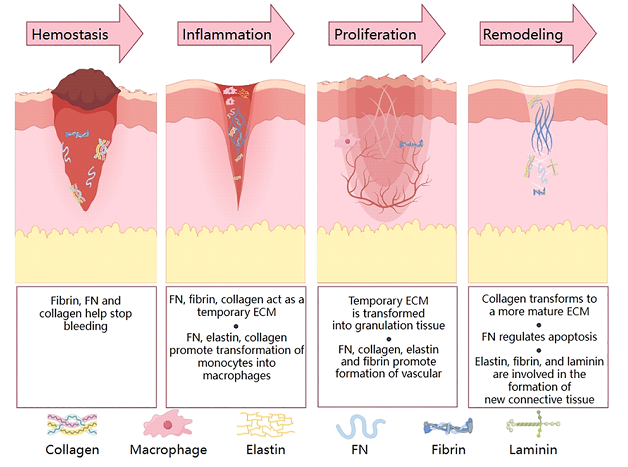
To understand why healing times are so different, let's have a look at the 4 stages of wound healing:
- Hemostasis: Blood clot formation within minutes.
- Inflammation: The body sends immune cells to clean the wound.
- Proliferation: Growth of new tissue, collagen, and blood vessels.
- Remodeling: Scar tissue strengthens over months.
A wound that successfully moves through these stages will heal rapidly.
If the wound becomes “stuck”, typically in inflammation, it turns into a chronic, slow-healing wound.
Why Some Wounds Heal in Days
Wounds of many animals fall into the “fast-healing” category. These are typically:
⦁ Minor abrasions or superficial cuts
These wounds hardly reach the dermis, so the body quickly fills in the gap.
⦁ Strong blood supply
Areas such as the head or upper neck heal rapidly because blood flow delivers oxygen and nutrients.
⦁ Minimal contamination
When bacteria load is low, the wound doesn’t get delayed by inflammation.
⦁ Younger animals
Puppies, kittens, and young pets heal surprisingly fast because their cellular turnover is great.
⦁ Moist wound environment
The moisture helps both in terms of cell migration and in allowing scabbing to be avoided, which fastens recovery.
⦁ When ECM biomaterials are used early
ECM scaffolds act like a biological blueprint, helping new tissue to be built in such a way that it regenerates correctly rather than simply scars.
This study also shows, The preserved ECM in decellularized scaffolds has structural properties that can provide a suitable environment for cell migration, growth, and replication to the injured area, improving the healing process, wound closure, and reducing scar tissue
Why Other Wounds Take Weeks or Months
Slow-healing wounds usually have complicating factors. Here are the most common:
1. Depth & Severity
Deeper wounds, particularly those involving muscle or fascia, need far more time to regenerate.
- Deep bites
- Fence or sharp object wounds
- Burns
- Surgical dehiscence
The deeper structures simply need more time, because the body has to reconstitute several tissue layers something ECM biomaterials can greatly speed up.
2. Contamination & Infection
Mouth is a primary way animals investigate the world around them. They lick wounds. They roll on the ground. An open wound is quickly infiltrated by dirt, saliva and bacteria.
Even a tiny infected wound may take longer to heal than a huge but clean surgical slice.
Infections cause prolonged inflammation, which delays tissue growth. This is where ECM products excel because many ECM materials naturally regulate inflammation and support a healthy transition into the proliferation stage.
3. Location Matters
Some areas heal gradually simply due to movement or poor blood supply.
Slow-healing areas include:
- Lower limbs of horses
- Tails, paws, ear tips
- Over joints (constant motion)
- Pressure points
Low blood flow = low cellular activity.
Motion = repeated invasions of sensitive new tissue.
ECM is beneficial in providing support and a framework for the wound, which facilitates organization even in mechanically stressed regions.
4. Chronic Health Conditions
Animals with the following issues heal slowly:
- Diabetes
- Cushing’s disease
- Hypothyroidism
- Obesity
- Poor nutrition
- Older age
Slower metabolism + reduced cellular regeneration = delayed wound closure.
By releasing biological signals ECM also stimulates cellular migration, enhanced remodeling and provides a conducive environment for regeneration, even when the animal lacks an innate ability to heal.
5. Dry Bandaging
This is one of the most common reasons wounds drag on for months.
Dry dressings absorb natural moisture, forming crusts.
Scabs are “hugely impairing” to healing because cells have to travel underneath them to close the wound, a tunneling that extends closure time for weeks or months.
There is evidence in modern veterinary science that favour moist wound healing and the use of ECM.
quicker closure, less scarring, fewer infections, stronger end tissue.
The ECM Advantage: Why It Changes Everything
ECM biomaterials, derived from natural extracellular matrices, act like a biological instruction manual for the body.
Instead of simply covering the wound, ECM:
- Guides new tissue formation
- Supports angiogenesis (new blood vessels)
- Reduces problematic inflammation
- Promotes healthy granulation tissue
- Reduces scarring
- Prevents wounds from becoming “stuck”
It provides a body for the organization to grow on, like scaffolding at a construction site.
When ECM is combined with wound care plans, even stubborn wounds usually shift from “months” to “weeks.”
This is why it’s becoming a gold standard in veterinary wound management.
Real-Life Example: Why a Small Wound Can Take Months Without ECM
For example, think of a horse with tendon-region disease at the distal limb.
Without ECM:
- Movement disrupts tissue
- Poor circulation slows repair
- Dry bandaging forms a crust
- Chronic inflammation persists
- The injury is left untreated for months.
With ECM biomaterials:
- A structural scaffold protects the healing environment
- Cells migrate effectively
- New blood vessels form quickly
- Healthy granulation tissue fills in
- Wound contraction improves
- Healing time is significantly reduced
This is veterinary wound care of the future in action.
What Makes Some Wounds “Magically” Fast?
You might have noticed that wounds with the following features heal surprisingly quickly:
- Moisture
- Good blood flow
- No infection
- Young, healthy tissue
- Less movement
- Early use of ECM scaffolding
These conditions are arranged ideally with what the body needs to rebuild tissue efficiently.
In contrast, wounds that are:
- dry
- contaminated
- under tension
- in low-blood-flow areas
- constantly reopening
- in older or immunocompromised animals
Veterinary Medicine Is Moving Toward Regenerative Healing
The largest change taking place in clinics today is the shift from managing wounds to regenerating tissue.
ECM is at the core of this change.
Rather than putting the body into a position where it must heal as fast as possible with tight bandages, ECM offers:
- structure
- signaling
- stability
- biological intelligence
It allows for animals to heal more the way nature intended.
Frequently Asked Question
What Are the 4 Types of Wound Healing?
- Primary Intention: Clean wound isolated and closed (sutures/staples) without delay.
- Secondary Intention: Left to heal through the process of granulation.
- Tertiary Intention: Appropriate for closure after infection/inflammation is reduced.
- Partial-thickness healing: Shallow wounds that have rapid re-epithelization.
What Makes a Wound Complicated?
A wound is complicated when healing cannot occur for any of the following reasons:
- Infection or heavy contamination
- Large tissue loss
- Deep structures exposed
- Poor blood supply
- Chronicity
- Underlying diseases
- Excess movement or necrotic tissue
What Are the 4 Principles of Wound Healing?
- Debridement
- Infection control
- Moist wound environment
- Protection & support of tissue (ECM – correct dressings)
When Thinking About Types of Wound Healing, What Type of Healing Is Tertiary Intention?
Tertiary intention = Primary closure delayed
(An open wound at first, later sewn up once clean.)
How Can I Speed up Wound Healing?
- Keep the wound moist, not dry
- Use ECM dressings for faster, healthier tissue growth
- Early infection control
- Maintain good nutrition (protein, vitamins, zinc)
- Secure the wound from trauma or contamination
Conclusion:
Every wound has its own story. Some are simple, some are complicated, some resist healing, and some close beautifully with little intervention.
But in nearly every case, the speed of healing is determined by:
- type and depth of the wound
- level of contamination
- location & blood supply
- the animal’s overall health
- whether moisture is maintained
- and if ECM-based biomaterials are utilized
Animals are impressive healers, but even impressive systems need support.
That’s where ECM changes everything. It speeds up healing, reduces the risk of complications and aids in turning chronic wound tissue into healthy skin at a rate that traditional methods could never touch.
Fast, safe healing isn’t just luck in today’s veterinary world.
It’s science, and increasingly, it’s ECM.


More from KessGen Insights.
.webp)

.webp)
To unlock the full power of the ECM and pioneer a new era of regeneration.


.webp)
.png)
.webp)

.png)