
The Future of Chronic Wound Care: ECM-Based Regenerative Solutions
Explore how ECM-based regenerative therapies enhance Chronic Wound Care by accelerating healing, reducing inflammation, and restoring damaged tissue.

.png)
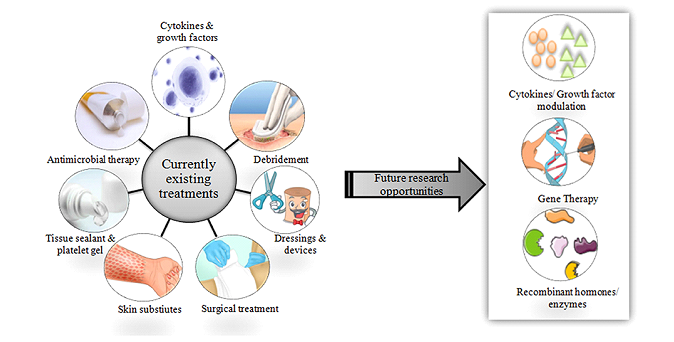
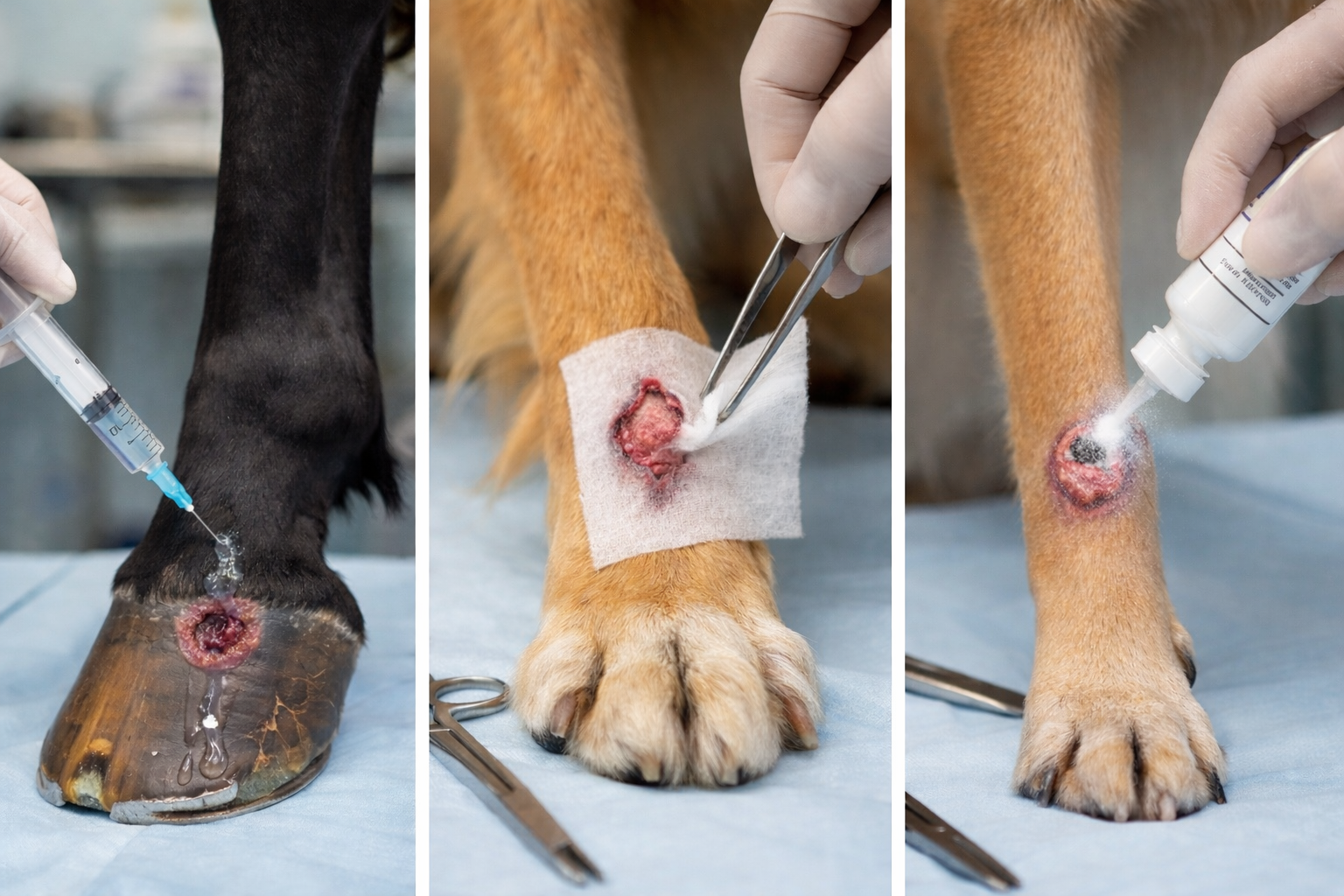
Over the past few years, medical innovation has rapidly changed our perception and management of non-healing wounds. Treatment of complex wounds has traditionally used gauze, antiseptics and dressings.
Although such methods can be palliative in skin-level signs, they leave intact underlying metabolic obstacles that prevent true healing. And then there's ECM, or Extracellular Matrix, a revolutionary, regenerative product that replicates the native healing microenvironment of the body. As studies continue, these types of therapies can serve as the wave of the future in regenerative medicine and offer new hope to those with diabetic ulcers, pressure sores, and other resistant surface wounds.
Understanding the Challenge: Why Chronic Wounds Are So Hard to Heal
Before discussing the role of the ECM, it is beneficial to understand why chronic wounds are still such a problem in modern healthcare. A long-term wound is typically defined as one that fails to progress through the normal stages of healing within about three months.
These stubborn sores refuse to heal for a number of reasons such as poor blood flow, infection, inflammation or other diseases, including diabetes.
The usual way wound care works now, in the traditional chronic wound, focuses primarily on trying to contain infection and protect that wound, but it doesn’t necessarily always stimulate tissue regeneration.
The Science Behind ECM: Nature’s Blueprint for Healing
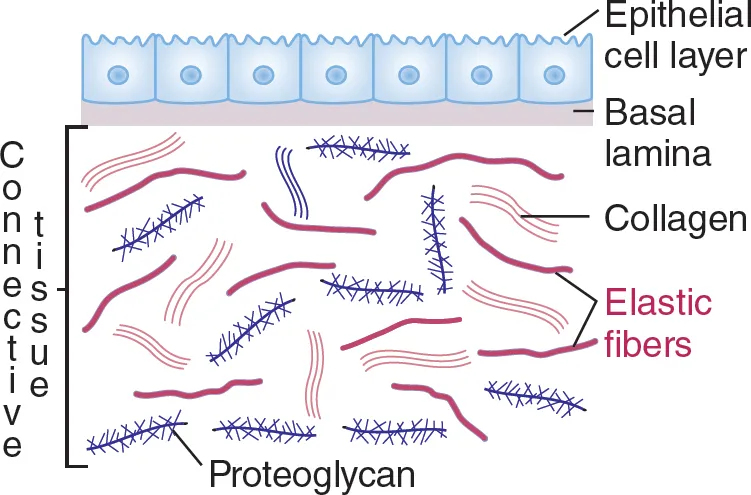
The ECM is the dynamic meshwork of proteins and molecules that surrounds cells, giving tissues structure and directing how they work or repair themselves. The ECM serves as the body’s natural scaffolding and not only physically supports cells but also provides important signals that control cell growth, migration and differentiation. In the case of injury, such as a skin wound, it is the ECM that directs cells to the correct positions and triggers them to produce new tissue.
It consists of important proteins which together generates a complex environment eliciting regeneration. ECM, in its ability to mimic the body’s natural architecture, serves as a basis for novel therapies that promote wound repair and tissue regeneration.As one study explains, Other proteins found in the ECM include laminin, fibronectin, vitronectin, and tenascin, as well as proteoglycans and glycosaminoglycans (GAGs) that make up the remaining 3–5% of the ECM.
Chronic Wound Care: Shifting from Management to Regeneration
Conventional wound management products like hydrocolloids, foams and alginates are aimed principally at keeping the wound clean and moist. Although this is helpful, it’s not really healing the tissue. The newer generation of ECM therapies is a breakthrough in the treatment of chronic wounds, transitioning from “caring” to actual regeneration.
ECM scaffolds not only shield of the wound, but also provide biological signals to reactivate dormant cells and restart the body’s healing response. So instead of months of old-time dressing changes, patients who previously would have had to wait it out will soon regain their tissues and minimize scarring.
Types of ECM-Based Regenerative Materials
ECM materials may be derived from, animal and/or human sources and are processed precisely to enable biocompatibility and safety. The ECM products currently being utilized in the treatment of chronic wounds are:
⦁ Human-Derived ECM:
These materials are sourced from donated human tissues, allowing replication to natural human biology and facilitating harmonious integration into the wound environment.
⦁ Synthetic ECM Mimics:
Scientists are engineering ECM scaffolds in the laboratory made from biomaterials such as collagen, elastin and hyaluronic acid. These ‘synthetic’ matrices can be tailored for different types of wounds. All of these substances works by creating a microenvironment that's more favorable to healing, a game changer in the treatment of chronic wounds, which no longer have the capacity for natural healing.
⦁ Porcine-Derived ECM:
Rich in collagen and growth factors, this type of ECM is often used in advanced wound dressings.
The ECM and Its Applications in Chronic Wound Healing:
There are already ECM‐based products in use in hospitals and wound care centers around the world. For instance, decellularized dermal matrices have been successfully used clinically in the treatment of diabetic foot ulcers and contribute to a reduced rate of amputation. ECM dressings, likewise, are showing promise in pressure sores, venous leg ulcers and even postsurgical wounds that won't close.
In the clinic, patients who receive ECM-based therapies often experience reduced inflammation, improved granulation tissue formation, and less pain. These clinical outcomes align with recent research supporting the effectiveness of ECM-derived materials. A study published on 22 July 2024 reported that, “Decellularised tissue-derived biomaterials have demonstrated significant promise in the treatment of Diabetic foot ulcers and chronic wounds through the facilitation of increased wound healing, ECM deposition and re-epithelialization.” The aim is eventually to help wounds close, covering both form and function.
The Role of Technology in Advancing Chronic Wound Care:
Innovation doesn’t end at the creation of ECM products. Their influence is being boosted by new technologies. Predicting the size of a wound that will be created by surgical removal is one example, while tailoring ECM delivery to individual patient wounds is another. Furthermore, 3D bioprinting is emerging as a new frontier for chronic wound management as it enables scientists to fabricate patient-specific ECM scaffolds related to the geometry of a specific wound. These customized regenerative patches may very well be the gold standard of therapy in the next decade.
A potential alternative is the combination of ECM with “stem cell therapy”. It is ECM’s structural support plus the stem cell regenerative quality that together have the ability to help turn injured tissue in as it strengthens, from the inside out.
Benefits of ECM-Based Regenerative Solutions:
The advantages of ECM-based regenerative medicine in chronic wound care are numerous and transformative:
- Lower Healthcare Costs:
- Faster healing means fewer hospital visits, dressing changes, and complications.
- Minimized Scarring
- ECM scaffolds promote organized tissue repair, reducing disfigurement.
- Reduced Infection Risk:
- The natural proteins and peptides in ECM can inhibit bacterial growth.
- Improved Patient Quality of Life:
- Shorter recovery times and less pain allow patients to return to daily life sooner.
- Faster Healing:
- ECM materials accelerate the wound healing process by supporting cell migration and angiogenesis.
Collectively, these benefits illustrate how ECM-based regenerative therapy is redefining what’s possible in wound healing.
Emerging Trends Shaping the Future of Chronic Wound Care:
Recent conversations in the medical industry are outlining how innovation and technology is affecting the future of chronic wound care. There are several key trends behind this shift, experts believe; among them, the increasing use of artificial intelligence (AI) for wound assessment and treatment monitoring.
AI tools are enabling doctors to make faster, data-informed decisions and allowing them to spend less time on documentation. And of course, there’s also an emphasis on health equity to ensure that cutting-edge wound therapies and digital solutions are available to patients in all communities. The trend toward better data documentation, furthermore, is increasing the quality of reporting and reimbursement as well as follow-up long-term care tracking. According to recent research, “AI holds tremendous potential for wound care with its ability to increase efficiency, communications, engagement and outcomes.”
Together, these trends signify a move towards more intelligent, connected and patient-specific models designed to increase the overall efficacy of chronic wound care in the coming years.
Worldwide Implications: ECM and the Healthcare Systems of the Future
The burden of chronic wounds is heavy globally, particularly among aging and diabetes-affected populations. Researchers have found that “As a significant global health burden, chronic wounds affect approximately 1%–2% of the population during their lifetime and account for as much as 10% of healthcare expenditures.” By this measure, if ECM-derived therapies become more prevalent, these treatments may significantly reduce hospitalizations and healthcare expenses related to chronic non-healing wounds.
Nations that invest in advanced “chronic wound care” technologies will likely have medical and socioeconomic returns. In the era of personalized medicine, when patient outcomes are central to medical progress, the use of ECM acts as a boost for innovation in biomedical engineering, tissue science, and regenerative medicine industries, translating into new workforces and research collaborations.
Chronic Wound Care: A Vision for the Future
Looking ahead, the blending of ECM technology with digital health, precision medicine, and biotechnology will modify the future of “chronic wound care”. We can expect more personalized, data-driven treatments where sensors and AI track healing progress in real-time, and ECM-based dressings adapt dynamically to the wound environment.
In this future, chronic wounds may no longer be a lifelong burden. Instead, they’ll be manageable, and even reversible, conditions treated through regenerative science. The shift from symptom control to true regeneration marks a revolutionary step forward in medical history, giving patients something they’ve long been missing: genuine hope for complete healing.
Frequently Asked Questions:
⦁ What Is the Wound Care Trend in 2025?
When it comes to wound care, the big trend in 2025 is that smart, connected, and personalized becomes a reality: you can expect sensor-packed dressings; cancerous-growth-scanning AIs to assess wounds for hidden problems, alongside monitoring band-aids for remote wound management that will revolutionize home care of wounds.
⦁ Is Regenerative Medicine the Future?
Yes, regenerative medicine is the future of healthcare. Using stem cells, gene editing, and ECM-based materials, it restores damaged tissues instead of just treating symptoms, offering more effective, personalized, and affordable treatments.
The extracellular matrix (ECM) plays a vital role in wound healing by guiding cell growth, migration, and tissue repair. It supports new blood vessel formation and controls inflammation. When damaged, healing slows, but restoring ECM function with bioengineered materials can reactivate natural repair and speed up recovery.
⦁ What Are the Latest Advancements in Wound Care?
Smart bandages containing sensors monitor a variety of wound conditions, such as moisture, pH and bacteria levels, alerting clinicians when action needs to be taken. AI extracts images of wounds to predict healing, bioengineered materials and 3D-printed skin actually prompt tissue regeneration.
⦁ What Are the 4 C’s of Wound Care?
Effective wound care follows the four C’s. First, clean the wound to remove debris and bacteria. Next, cover it with a suitable dressing to protect it. Then, care for the surrounding skin and monitor the healing process closely. Finally, control any infection and manage factors such as blood sugar or pressure that could interfere with proper recovery.
Conclusion: A Regenerative Tomorrow
The field of “chronic wound care” is rapidly advancing into a biologically inspired and regenerative place. ECM-based therapies exemplify this evolution, paving the way out of standard treatments and into an era where the body’s native capacity to heal itself is blended in and amplified. There are still initial challenges in terms of price, access and knowledge. With both these adoptive approaches being fine-tuned by science, we are marching back to a reality where chronic wounds are no longer seen as fatal,but rather a manageable challenge. But in the end, this ECM-powered regenerative approach to healing isn’t just resetting the way we heal wounds; it’s restructuring what healing is altogether.


More from KessGen Insights.
.webp)

.webp)
To unlock the full power of the ECM and pioneer a new era of regeneration.


.webp)
.png)
.webp)

.png)