
How Extracellular Matrix and Connective Tissue Work Together to Restore Strength in Healing Pet Wounds
Learn how extracellular matrix and connective tissue work together to restore strength and improve wound healing in pets.

Wound healing is a highly organized biological process that restores tissue integrity after injury. In domesticated animals, such as dogs, cats, and other pets—effective wound healing is essential to prevent infection, rebuild damaged tissue, and preserve overall quality of life. Central to this healing cascade is the coordinated interaction between the extracellular matrix and connective tissue, which together provide the structural support and strength needed for proper tissue repair.
This article will examine the interaction of these two pivotal elements, their relevance to veterinary wound healing, and what scientific research reveals about them as they contribute to restoring strength in wounds as they heal.
What Is the Extracellular Matrix?
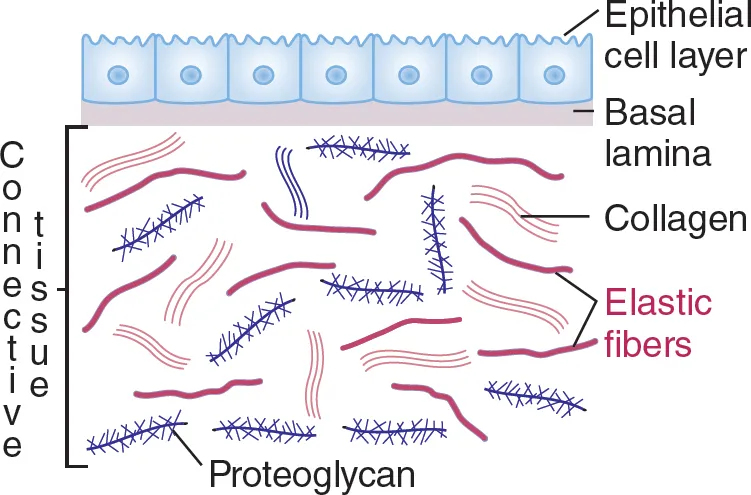
The extracellular matrix (ECM) is a dynamic network of proteins, glycoproteins, and other molecules found outside cells in all tissues. It serves as structural scaffolding, allows for cell adhesion and can also influence a cell's behavior. Key elements of the ECM are:
- Collagen: The main structural protein that provides tissue with mechanical strength
- Elastin: Provides elasticity and resilience
- Fibronectin and Laminin: Adhesive molecules which guide the cells
- Proteoglycans &Glycosaminoglycans: Aid in binding water and provide compression strength.
Together, these components create a three-dimensional mesh that does far more than “just sit there”, it actively communicates with cells and drives biological responses during tissue healing and regeneration.
Understanding Connective Tissue
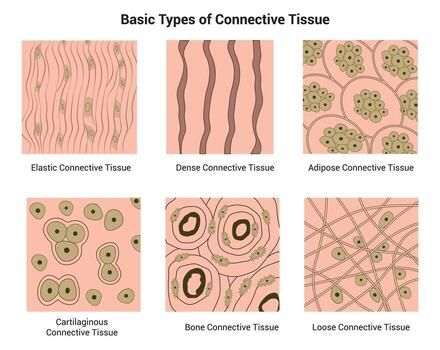
Connective tissues are a very large category of tissues that encompass tendon, ligament, skin dermis, bone and adipose (fat) tissue, among others. It is primarily composed of the ECM, but also contains different cells (e.g., fibroblasts, immune cells and specific cell types including chondrocytes or osteocytes, depending on the tissues).
At healing, connective tissue does the following:
- Provide strength and restore the affected part
- Cell-based compartment with restorative function
- Sites for the regrowth of vessels and nerves
The ECM content of connective tissue is important since the repair relies on the ability of extracellular matrix and connective tissue to work together in rebuilding damaged structures.
The Phases of Wound Healing in Pets
Healing is a highly interconnected and overlapping series of stages:
1. Hemostasis:
In the immediate aftermath of injury, blood vessels constrict and platelets clot to halt bleeding. Provisional fibrin and other ECM components form the first scaffolding for re-establishment of tissue structure.
2. Inflammation:
WBCs are attracted to the area in order to keep out an infection. During this second stage, the extracellular matrix also guides cell migration and growth factor signaling, ultimately influencing how immune cells act.
3. Proliferation:
Fibroblast grow and secrete new ECM proteins, including collagen. Angiogenesis (new vessel formation) and the development of granulation tissue is initiated, driven by the dynamics of ECM.
4. Remodeling:
The temporary ECM is replaced by fibrous connective tissue. Collagen fibers orient themselves in alignment with lines of tension, and the tensile strength of the wound progressively increases.
How Extracellular Matrix and Connective Tissue Interact During Wound Healing?
At the heart of connective tissue healing lies the crosstalk between cells and the extracellular matrix and connective tissue. The interaction is important for understanding how wounds heal and regain strength:
ECM as a Structural Scaffold
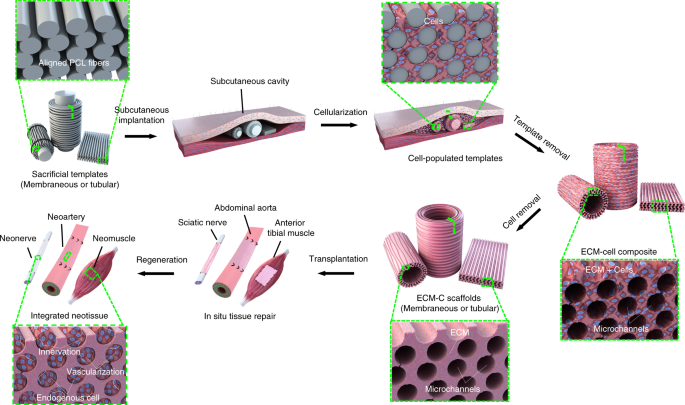
Cells migrate, proliferate and differentiate on a 3D structure that constitutes the extracellular matrix. During the early phase of healing, fibroblast migration is supported in a provisional matrix (of fibrin and fibronectin) that is formed. Those fibers are reinforced later, by deposition of collagen by cells such as fibroblasts.
Signaling and Guidance
ECM components sequester growth factors and deliver them to cells, stimulating cellular responses. This is responsible for important processes as follows:
- Fibroblast activation
- Endothelial cell migration during angiogenesis
- Regulation of inflammation
These life functions would be chaotic and sluggish without the extracellular matrix and connective tissue.
Mechanical Support and Force Transmission
The ECM’s stiffness contributes to tissue integrity and conveys mechanical signals that control cell functions. Cells detect the stiffness and alignment of ECM fibers, and respond by reforming them, an important stage in regaining injured tissue strength.
ECM in Pet Wound Healing: What Research Shows?
While most ECM research is built on human tissues, few major veterinary studies have illustrated how it applies to pets:
Dressings With ECM Aid in Canine Wound Healing
The current study in dogs with full thickness skin wounds evaluated traditional wound repair and a new extracellular matrix dressing. Results showed:
- Faster skin closure (greater rates of epithelialization)
- Better histologic repair scores compared to controls.
In summary, this demonstrates that ECM therapies can improve both the rate and quality of tissue repair in veterinary patients.
Matrix as a Pet Biomaterial Scaffold
Studies in veterinary medicine employing ECM from biological tissues demonstrated the betterment of wound healing using it as a cell supporting regenerative therapy. These results highlight the interplay of extracellular matrix and connective tissue in wound healing.
Why ECM Matters for Restoring Strength in Healing Wounds?
1. Collagen Deposition and Tensile Strength
Collagen fibers, which are secreted by fibroblasts, provide the structural framework for strength in connective tissue. With time, collagen cross links and arranges along lines of stress to increase tensile strength. Weak wounds may form if collagen synthesis is deficient.
2. Balanced Remodeling for Scar Formation
The ECM manages the remodeling process by controlling enzymes such as matrix metalloproteinases (MMPs) that degrade old matrices and promote formation of new organized connective tissue. Careful balance between synthesis and decomposition is of critical importance.
3. Cell Recruitment and Angiogenesis
Signaling molecules released from the extracellular matrix summon cells necessary for healing and promote new blood vessel formation, crucial in delivering nutrients and oxygen to tissue in regrowth.
Clinical Implications for Veterinary Practice

1. Targeted ECM Therapies
In recent years, ECM-based products including scaffolds, dressings and biomaterials have been adopted by veterinarians to enhance wound healing. These therapies can:
- Reduce healing time
- Enhance tissue strength
- Minimize scar tissue
- Improve cosmetic outcomes
The science indicates that the more we can actively influence our extracellular matrix and connective tissue environment, the more efficient is healing.
Challenges and Future Directions
Although ECM’s role in wound reparation is well known, there are issues present:
1. Chronic Wounds
In chronic wounds, ECM architecture is disturbed, fibroblasts senescent and the healing process reaches a halt. Investigation to cause disruption in this cycle by altering ECM turnover is under research.
2. Scar Prevention
Insight into the role of ECM composition in scarring might result in therapies that nudge regeneration instead of fibrosis.
3. Enhanced Veterinary Applications
More pet-related studies will assist in the improvement of these ECM based therapeutic strategies toward the most prevalent veterinary wound types.
Conclusion
Extracellular matrix and interstitial tissues together make an ideal couple, capable of healing a wound effectively. As a biological scaffold and signaling center, ECM surrounds and provides specialized instruction at all stages in wound healing from initial clotting to late tissue remodeling.
Its benefit for pets is that it promotes the recovery of damaged tissues with renewed strength, elasticity and vitality.
Scientific studies have proven ECM is essential in the direction of cells, angiogenesis, and the formation of tissue. Veterinary research also brings out the clinical advantages of ECM-based therapies for wound healing.
With further research, the utilization of extracellular matrix and connective tissue is expected to provide even more successful results in wound closure for pet patients.


More from KessGen Insights.
.webp)


.webp)
To unlock the full power of the ECM and pioneer a new era of regeneration.


.webp)
.png)
.webp)

.png)