
ECM in Medical Research: Why Stem Cells Behave Differently in Bio-Scaffolds
Discover how ECM in medical research helps stem cells grow, heal, and regenerate more naturally within 3D bio-scaffolds.

In recent years, ECM in medical research has become one of the most exciting areas in regenerative medicine. Scientists have discovered that the extracellular matrix (ECM), a three-dimensional network that provides structural and biochemical support to cells, plays a far more dynamic role than merely holding tissues together.
Stem cells, when they start interacting with bio-scaffolds comprised of ECM react fundamentally in a different manner than they do when grown on in a polystyrene petri dish. They grow faster, and even “connects” more effectively to other cells around them.
But what makes this happen? How do stem cells behave differently in ECM-based structures? So that’s something interesting we’re looking at step by step.
Understanding ECM in Medical Research
In order to recognize and appreciate the effect of ECM on stem cells, it is necessary to understand what ECM truly constitutes.
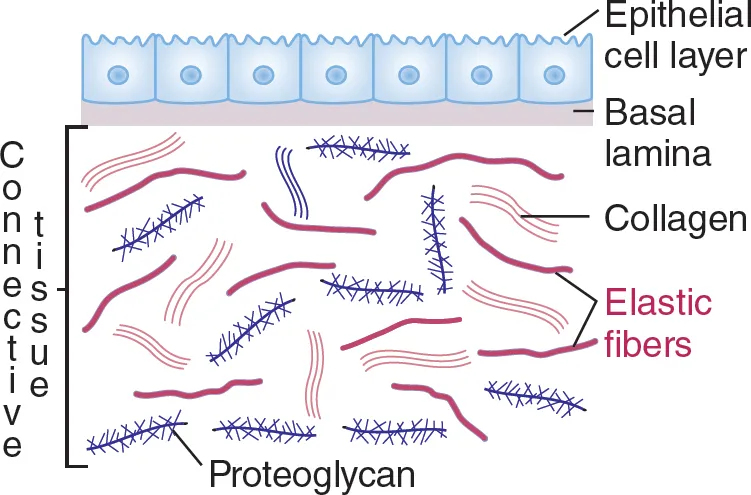
The extracellular matrix is a combination of sugars, proteins and signaling molecules. It provides the space around cells and supports elasticity, structure and strength to tissues.
Think of it as a “biological neighborhood” the environment where cells live, move, and interact with each other.
In medical research, particularly, ECM has become increasingly important because it isn’t just a passive structure. It sends biochemical and mechanical signals that direct how cells grow, repair and regenerate.
When scientists replicate this environment with bio-scaffolds made of ECM materials, they're able to replicate how tissues form and repair themselves inside the body.
What Are Bio-Scaffolds and Why Are They Important?
A bio-scaffold is an artificial or natural structure that provides a temporary environment for cells at the time when tissue heals or regenerates.
They can be made from:
- Natural ECM materials, like collagen or fibrin
- Artificial materials with the intent to duplicate that ECM trait
- Or decellularised tissues, from which all cells have been extracted while maintaining the ECM architecture
These scaffolds provide something for cells to adhere to and grow on. New tissue develops over time, and the scaffold eventually dissolves or incorporates into the body.
As a scaffold in medical applications, ECM can make cells act more like in real tissues.
How ECM Shapes Stem Cell Behavior
Stem cells are special because they can develop into a variety of different types of cell, like skin, bone or muscle. But what determines which way those moves go? That’s where ECM in medical research comes in.
In medical literature, it has been demonstrated that the shape, rigidity, and/or composition of the ECM can directly affect cell activities.
Here’s how:
1. ECM Provides Physical Cues
The texture and stiffness of the ECM tell stem cells what tissue they’re in.
- Softer matrices tell stem cells to transform into brain or fat cells.
- A firmer matrix sends them in the direction of bone or cartilage.
So when a bio-scaffold imitates the correct stiffness, it directs stem cells to develop into the correct type of tissue required.
2. ECM Sends Biochemical Signals
The ECM consists of proteins such as collagen, laminin, fibronectin and growth factors that serve as messengers.
Those compounds bind to receptors present in the stem cells, triggering signals that spur those cells to grow, migrate and specialize.
In the absence of these signals, stem cells frequently remain idle or do not grow correctly.
3. ECM Encourages Cell Communication
In the body, cells are continually “talking” to one another via signalling carried by the ECM. This "communication" facilitates balance and directs the body to heal. When stem cells are put into a lab experiment, much of this communication is gone.
But inside an ECM-based bio-scaffold, they recover that natural conversation, which helps them behave more like they do inside the body.
Why Stem Cells Behave Differently in ECM Bio-Scaffolds
During the lab trials, When scientists watch stem cells in traditional lab conditions, they often see the cells behave unnaturally. They could flatten out, lose their identity or not organize into tissues at all.
But when you put those same cells into an ECM-based environment, it all changes.
Here’s why:
1. 3D Environment Mimics Real Life
With medical scaffolds, the ECM is allowed to exist in three dimensions, just as it does in human tissue.
This means stem cells can spread, stick and talk to their environment in a more realistic manner.
In a flat 2D culture, cells reside at the top the surface. But, Inside 3D ECM scaffolds, they’re surrounded by the same stuff that is found inside the human body, and that changes how they divide and grow.
2. Natural Mechanical Support
The elastic behaviour of the ECM is ideal, giving both support and freedom. It helps to keep cells in place but also allows them to move and deform their environment.
That dynamic mechanical environment, in turn, instructs stem cells on how to respond to pressure, tension and stretch, experiences vital for tissue development.
3. Better Nutrient and Oxygen Flow
In ECM-derived scaffolds, small holes and fibers can distribute nutrients and oxygen uniformly.That keeps the stem cells healthy and chanting, while holding off the overcrowding and stress that tend to arise in flat cultures.
4. Activation of Natural Pathways
When the stem cells detect environmental cues from the ECM, some genes gets turned on that wouldn’t previously. This comprises genes that are responsible for growth, differentiation and repair. Moreover, ECM “reminds” the stem cells who they are and what they can turn into.
ECM in Medical Applications: Turning Research Into Real Treatments
The findings about ECM in medicine do not just remain theoretical. They’re helping to map and transform the future of real-world treatments.
Now days, ECM-derived bio-scaffolds are being employed in:
- Wound recovery to regenerate skin tissues in a natural manner
- Orthopedic repairs for bones, ligaments and tendons
- Cardiac regeneration: Rebuilding heart tissue after injury
- Nerve repair directs the regrowth of injured nerves
And when these scaffolds are used in combination with stem cells or platelet-rich plasma (PRP), the healing potential rises significantly.
Stem cells bring regeneration potential, PRP brings growth factors and ECM brings structure and signaling; all three of them can work together strongly in regenerative medicine.
Case Studies: ECM and Stem Cells in Action
Skin Regeneration
In one clinical study, researchers used ECM-based scaffolds made from porcine (pig) tissue to treat chronic wounds. When these scaffolds were combined with stem cells, the wounds closed faster and the skin regenerated with fewer scars.
The ECM not only supported the cells but also reduced inflammation, allowing natural healing to take over.
Bone Repair
ECM bio-scaffolds were also utilized with bone-forming stem cells in another study. The ECM had the right stiffness and mineral to allow those stem cells to grow into strong, structured bone.
Currently, this technique is being trialed for those fractures that are impossible to heal using conventional techniques.
Heart Tissue Engineering
After a heart attack, damaged tissue is replaced with scar tissue that doesn’t contract properly. Researchers found that injecting ECM hydrogels into the heart wall helped stem cells settle and form new, functioning muscle tissue.
This approach is one of the most promising directions in ECM-based cardiac therapy.
The Future of ECM in Medical Research
The more scientists learn about the ECM, the more they realize how central it is to life itself.
It’s not just a support system; it’s an active participant in cell behavior, disease progression, and healing.
Here’s what the future may hold for ECM in medical innovations:
- 3D Bioprinting with ECM “Ink”
- Now, researchers have begun to print tissues using bio-inks composed of ECM materials. This may open the door to lab-grown organs that are fully functional.
- Smart ECM Scaffolds
- These next-generation scaffolds can react to changes in their environment, releasing growth factors or altering stiffness as tissues heal.
- Personalized ECM Materials
- Creating ECM scaffolds from a patient’s own cells can reduce immune reactions and improve compatibility.
- Combining ECM with Artificial Intelligence (AI)
- AI tools are helping scientists map how stem cells respond to different ECM patterns, speeding up the design of more effective biomaterials.
Challenges Ahead
Despite the rapid progress of ECM in medical research, many obstacles remain: ·
- Standardization: Every ECM source (human, animal, or synthetic) acts differently.
- Cost: The production and processing of ECM materials are not inexpensive. ·
- Regulation: So far, there is no clear regulation on safety and quality standards for ECM-based medical products.
Still, the potential is enormous. As we continue to understand how ECM influences cell behavior, new doors will open for treating injuries, diseases, and even aging itself.
Conclusion: The ECM–Stem Cell Partnership
The study of ECM in medical science teaches us that healing is more than adding new cells; it’s about re-creating the correct environment for those cells to succeed.
Stem cells function differently in bio-scaffolds because the ECM provides cues that resemble the native body environment. It instructs them on how to grow, what to become and how to interact with their neighbors.
By combining ECM, stem cells, and advanced biomaterials, regenerative medicine is moving closer to a future where damaged tissues can truly rebuild themselves.
The more we learn about ECM in medical science, the better equipped we will be to train stem cells for healing effectively and naturally.
Frequently Asked Questions (FAQs)
1. What exactly is the extracellular matrix (ECM)?
The ECM is a natural network made of proteins, sugars, and signaling molecules that surrounds cells in the body. It gives tissues their structure and also sends signals that guide how cells grow, move, and repair themselves.
2. How does ECM affect stem cell behavior?
ECM provides both physical and chemical cues that help stem cells know what type of tissue to become. It can influence how they divide, move, and connect with neighboring cells, something that doesn’t happen as effectively in flat lab cultures.
3. What are bio-scaffolds made from ECM used for?
Bio-scaffolds built from ECM materials serve as temporary structures that support cell growth during tissue repair. Over time, they help the body rebuild natural tissue and may dissolve or integrate into the body.
4. Why do stem cells behave differently in ECM bio-scaffolds compared to petri dishes?
In ECM bio-scaffolds, cells grow in a 3D environment similar to what they experience inside the body. This allows for better communication, nutrient flow, and realistic physical interactions that improve tissue formation.
5. Can stem cells repair heart tissue?
The heart can’t naturally replace damaged cardiomyocytes. However, recent research suggests that stem cell–derived cardiac cells may offer a promising way to repair and regenerate heart tissue.


More from KessGen Insights.

.webp)


.webp)
To unlock the full power of the ECM and pioneer a new era of regeneration.


.webp)
.png)
.webp)

.png)