
How ECM Supports the Question: Is Bioprinting the Future of Organ Transplants?
Learn how ECM supports bioprinting innovations and answers if bioprinting is the future of organ transplants through research, methods, and breakthroughs.

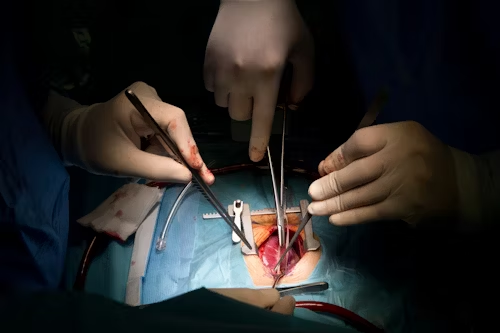
Is bioprinting the future of organ transplants Bioprinting: Promising technology that characterizes a fascinating debate in regenerative medicine and biotechnology primarily. With a global shortage of organs the situation is becoming worse, long waiting lists and the increasing need for organs means that scientists are turning to advanced procedures such as extracellular matrix (ECM) based bio-printing.
While 3D bioprinting is a breakthrough technology for deposition of cellular spheroids, it is the ECM that provides the biological authenticity, structural cues and biochemical environment to help transition printed tissues into functional organs.
To determine if bioprinting will really replace organ transplantation. It is important to factor in the essential role of ECM and what it could do for the future between organisms.
Understanding ECM: The Biological Foundation of Functional Organs
The ECM is a natural biological scaffold that is present in all tissues. It is made up of proteins, glycoproteins, growth factors and structural fibres such as collagen and elastin. Further studies represent,.Collagens form the primary structural framework of the ECM, representing approximately 30% of total mammalian protein and providing essential tensile strength
.ECM provides not only the physical structure to organs but also controls fundamental cellular processes: migration, differentiation, adhesion, proliferation and maturation. A study published on 11 May 2022 shows,3D bioprinting has shown huge potential in the field of tissue and organ regeneration. The ECM, as the natural environment in which cells exist, provides cells with structural support and biochemical signals and promotes a series of important cellular processes, such as proliferation, migration, proliferation, and differentiation. Therefore, ECM-based biomaterials are ideal for tissue and organ regeneration printing materials
Why ECM Matters in Bioprinting
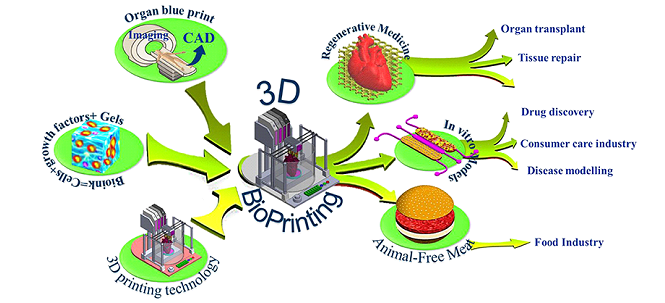
3D biofabrication uses bio-inks mixtures of cells and biomaterial printed layer by layer to make tissues and organs. Bio-inks extracted from ECM emerged as an attractive candidate due to its:
1. Provide natural cell signaling
Cells identify the constituents of the ECM and respond by stimulating growth and repair pathways.
2. Enhance cell survival
The trinodal network of the engineered tissue ECM biochemistry sustains excellent cell viability during and after printing.
3. Improve tissue maturity
Printed organs need to grow to have the same structure, stiffness and function as natural organs. ECM helps guide this development.
4. Allow organ-specific bioprinting
ECM derived from heart, liver or lung retains tissue-specific patterning that influence the signature/behavior of new tissues.
5.Promote vascularization
5.Promote vascularization
Construction of blood vessels is such a difficult task for organ production. ECM provides biochemical gradients for endothelial cell (EC) recruitment the critical process in the formation of functional vasculature.
ECM-free bioprinting would fabricate unbiological cue-sparse tissues. With ECM, printed organs have a much better chance of behaving like the real thing.
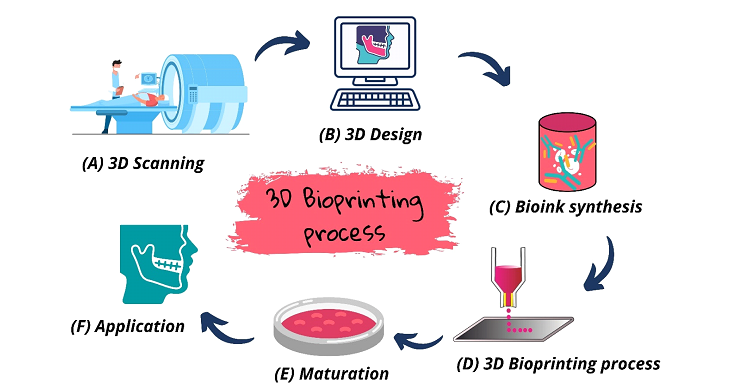
How ECM-Enhanced Bioprinting Works
The process generally includes:
Decellularizing an organ
In this manner, scientists extract all cells out of a donor organ by application of either chemical or enzymatic treatments. What is left behind is a decellularized ECM scaffold.
Processing the ECM
The scaffold is ground to powder, dissolved in solution and then, respectively formed into a printable hydrogel or bioink with stem cells.
3D Bioprinting
Dedicated printers deposit ECM-based bioink layer-by-layer, based on a digital organ pattern file.
Cell maturation in bioreactors
The printed organs develop within controlled environments, where nutrients and oxygen (as well as mechanical stimuli via their surface) can dictate development.
This approach combines biological fidelity with engineering control and brings us closer to the goal of on-demand, personalized organs for transplantation.
ECM and the Future of Organ Transplantation
One of the great challenges of medicine is organ shortages. Thousands of patients die waiting for a transplant every year. Such a crisis may be avoided by referring Certainly with an ECM-driven way in which to avoid end this disaster by:
• Personalized organs
Made from a patient’s own cells to reduce the likelihood of rejection.
• Unlimited organ supply
You could bioprint organs as they were needed.
• Reduced transplant complications
Biocompatible ECM cannot only decrease inflammation, but also may improve after surgery integration.
• Disease-modeling and drug testing
Even before they have made it into the clinic, printed tissues are already revolutionizing pharmaceutical research by providing more human-like models.
The more into bioprinting the field incorporates the ECM, the closer it gets to building fully functional organs such as kidneys, hearts and lungs.
Frequently Asked Questions
1. What Is ECM in Bioprinting?
ECM in bioprinting ECM is a type of biological scaffold material produced from decellularized tissues and incorporated into bioink to direct cell growth, structure, and organ-specific function.
2. Is 3D Bioprinting the Future of Organ Transplants?
It's quickly becoming one of the biggest solutions to tomorrow, personalized organs, an end to donor shortages but full-organ printing is still in its infancy..
3. How Might Tissue Engineering Change the Future of Medicine and Organ Transplants?
It would make lab-grown organs and other advanced regenerative therapies safe from the risk of rejection, more effective at treating illnesses and diseases would be better understood innovating medicine.
4. What Is the Future of Organ Transplants?
The future involves bioprinted organs, synthetic organ assist, gene-edited donor organs and ECM- personalized transplants.
5. What Is the Future of Bioprinting?
Bioprinting will be moving closer to the printing of complex organs with integrated vasculature, personalized living tissues.
Conclusion: Is Bioprinting Truly the Future of Organ Transplants?
The question “is bioprinting the future of organ transplants” can be answered with growing confidence: yes, bioprinting is evolving into the leading solution for the global organ shortage. But this future depends heavily on the continued development of ECM-based technologies.
ECM is the biological architecture that causes printed tissues to act like real organs. That biochemistry and architecture gives cells everything they need to grow, differentiate into the types of adult cells we know so well, and arrange themselves together in useful ways. Without ECM, these bioprinted tissues would be weak and synthetic-like. Furthermore, combined with ECM, it can generate functional organs suitable for transplantation.
ECM-boosted bioprinting takes us another leap forward toward the day when no one need die waiting for a transplant, personalized organ transplants are routine and regenerative medicine revolutionises surgery.


More from KessGen Insights.
.webp)


.webp)
To unlock the full power of the ECM and pioneer a new era of regeneration.


.webp)
.png)
.webp)

.png)