
Extracellular Matrix (ECM) Dressings: The Future of Regenerative Wound Care.
Discover how bioactive wound dressing and ECM technology accelerate healing, promote regeneration, and redefine modern wound care.

Introduction: Bioactive Is the Future of Healing
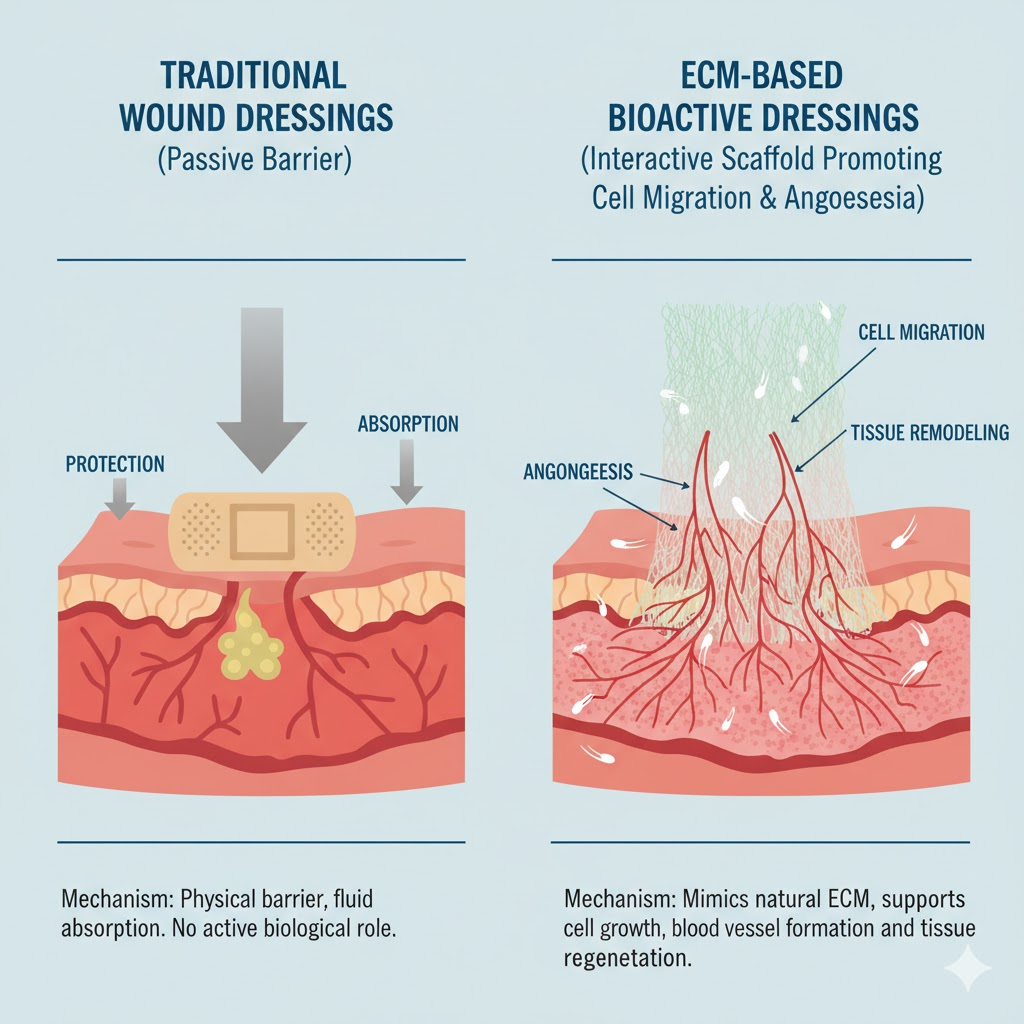
For millions of people, a chronic wound like an ulcer or burn can turn into a long, painful medical problem that traditional treatments often fail to solve. Millions still suffer from ulcers, burns, or slow-healing surgical wounds despite years of technological progress. Traditional dressings and bandages merely cover the affected area without actively contributing to the healing process.
That’s where bioactive wound dressing comes into play, especially an extracellular matrix (ECM) based one. The ECM is a natural network of collagen, elastin, and glycoproteins that provides both structural support and biochemical cues for cell growth and repair.
These specialized materials are changing the face of regenerative wound healing by utilizing the body’s own biological responses. ECM‐based dressings do not merely cover a wound; they promote actual tissue regeneration and additional acceleration of the healing process.
The result? Faster, less scarring, and a new paradigm of healing, which is not only wound sealing, but also wound regeneration. (NIH, 2022)
What Are Bioactive Dressings?
Bioactive wound dressings do more than just heal. They promote and stimulate the body’s natural healing processes at a cellular level.
Unlike standard dressings such as gauze or hydrocolloid materials, which serve only as protective barriers, bioactive dressings interact with the wound's surroundings and promote tissue regeneration. They do so with the help of biological components that foster cell growth, repair and communication.
Natural Sources and Structure
Most types of ECM-based dressing are founded on natural tissues; their sources can be porcine or bovine dermis (in many cases, decellularized) or other human-based tissues. During production, all the cells are removed, leaving behind the ECM structure, which is a network of collagen, elastin, glycoproteins, and proteoglycans upon which the cells rely as a body scaffold.
When placed on an injured area, the ECM dressing serves as a guide for wound repair. It aids cells to multiply, move and rebuild the affected tissues, essentially telling the body, “Here’s your blueprint; start building.”
The bioactive dressings can contain:
- Collagen-based dressings promote fibroblast proliferation and tissue granulation.
- ECM-derived scaffolds can confer both mechanical support and biochemical cues.
- Hydrogel bio-dressings provide an environment that is moist and provides the growth factor/ antimicrobials.
- Hybrid biologic dressings combine natural and synthetic polymers for controlled degradation and strength.
This is a complete change of passive protection to an active role in the healing process.
Disadvantages of Traditional Dressings
Before understanding why ECM dressings are revolutionary, it helps to see where traditional options fall short.
Types of dressing used are:
- Gauze: Inexpensive and absorbent but non-selective. May damage new tissue upon removal.
- Hydrocolloids: Provide a moist environment and can entrap exudate and delay epithelialization.
- Alginates: Excellent to use in heavy exudate control, but they do not have bioactivity or regenerative capability.
Even though such materials eliminate the chance of wound contamination and manage the fluids, they do not influence cellular activity. This is a considerable shortcoming of chronic wounds - e.g., diabetic ulcers or venous leg ulcers. These wounds are particularly not capable of progressing to actual tissue regeneration as they tend to stay in the inflammatory stage.
The scenario of using traditional and ECM-based biologic dressings is like patching or building the wall, respectively. ECM dressings are scaffolds that include biological guidance, whereby cells are stimulated to mature into functional, healthy tissue instead of fibrotic scar tissue. (MDPI Journal of Functional Biomaterials, 2023)
The Effect of ECM on Wound Healing
The first wound-healing toolkit is the extracellular matrix created by nature. It serves as a biochemical hub as well as a physical scaffold, which coordinates the actions of the repair-involved cells.
A bioactive wound dressing that specifically uses an ECM technology supports the natural human healing, faster, and more effective tissue regeneration.
Here's how an ECM dressing supports the healing process at every stage:
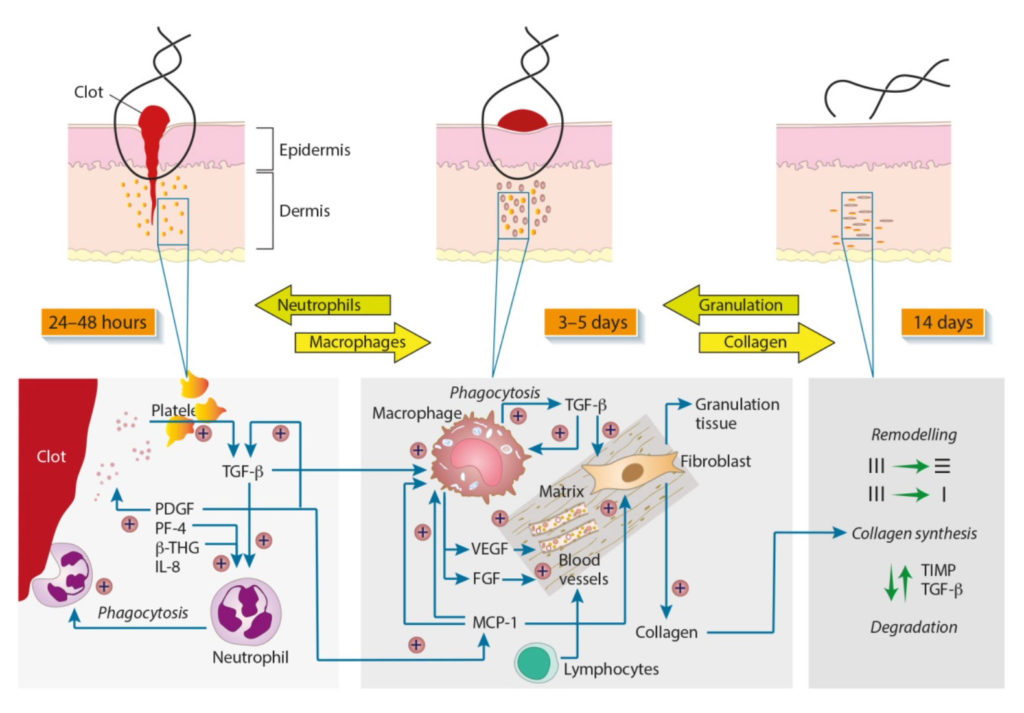
- Hemostasis and Inflammation
- When a dressing composed of an ECM is used on a wound, it comes into contact with platelets and cytokines to aid in the control of inflammation.
- It has been shown that ECM scaffolds can help reduce excessive inflammation, allowing the wound to transition more quickly from the inflammatory stage to the proliferation stage. This balanced response helps prevent chronic inflammation, which could otherwise delay or block the healing process.
- Cell Recruitment and Migration
- The ECM contains key structural proteins such as collagen and fibronectin, which attract fibroblasts, keratinocytes, and endothelial cells. These cells move into the dressing where they form tissue by using it as a natural framework.
- Angiogenesis (New Blood Vessel Formation)
- The positive effect of ECM-based regenerative wound therapy is its capability to induce angiogenesis, the development of new capillaries. Components of the ECM secretion cause the growth factors of the endothelial cells to maintain the supply of oxygen and nutrients to the healing tissue.
- Remodeling and Integration
- As healing progresses, the ECM dressing gradually degrades, replaced by the patient's own newly synthesized matrix. The smooth transition enables the tissue to restore its structure and strength as time progresses, through regeneration rather than repair.
- Antimicrobial and Immunomodulatory Benefits
- Many bioactive dressings made from decellularized porcine Extracellular Matrix (ECM) possess natural immunomodulatory and antimicrobial properties. For example, peptides that are derived from decellularized porcine ECM can suppress bacterial growth and help regulate local immune activity, creating a cleaner and more balanced wound environment.
- In studies conducted in Tissue Engineering Part B, ECM-based scaffolds show better results in chronic ulcers and surgical wounds in comparison to conventional dressings. They do not just cover rather they communicate with cells.
Emerging ECM Technologies
The field of bioactive wound dressings is advancing rapidly, with innovative materials and delivery systems entering both research and clinical use.
⦁ Decellularized ECM Scaffolds
In biologic dressings, decellularization represents the gold standard for material preparation. These materials preserve the 3D structure of natural tissues, which becomes an ideal environment in which cells may proliferate. In order to keeping up with particular types of wounds, scientists are now developing ECMs based on different tissues such as the dermis, pericardium, and the small intestinal submucosa.
⦁ ECM-Infused Hydrogels
ECM hydrogels are attracting attention due to their conformable and injectable characteristics. They can seal irregular injuries and keep them hydrated and conducive to cell motility. It is even possible to have some hydrogel that has controlled-release growth factors to provide a dynamic healing environment.
⦁ Hybrid and Synthetic-Biologic Blends
To enhance durability and scalability, researchers are mixing natural ECM structures with other synthetic polymers such as polycaprolactone (PCL) or polyethylene glycol (PEG). These hybrid materials retain the biological functions, and they enhance mechanical strength and shelf life.
⦁ 3D-Printed ECM Constructs
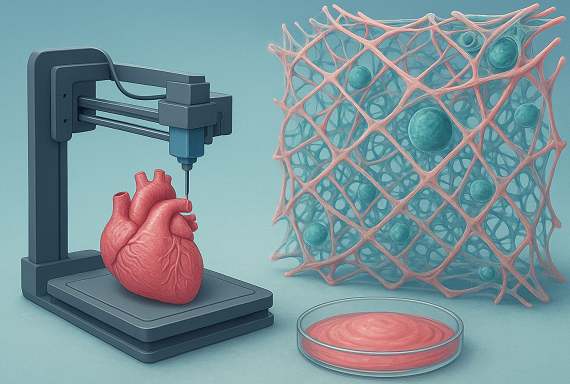
We now have 3D printing for managing wounds. From ECM-based bioinks, layers of matrix material can be printed in the shape and size of a wound. This process helps to create the dressings of the correct structure and porosity for improved healing. In future, surgeons may even be able to 3D print personalised ECM dressings on the spot during a surgery.
⦁ Smart and Responsive Dressings
Next-generation ECM dressings are being integrated with biosensors that can monitor pH, temperature, and exudate composition, adjusting drug release in real time. Such intelligent systems create a boundary between regenerative medicine and digital health.
According to recent reports in Nature Biomedical Engineering, such intelligent ECM dressings could drastically shorten hospital stays and improve chronic wound management outcomes worldwide.
The Future of Wound Care
Advanced wound care in the global market is expected to exceed the 19.32 billion mark by 2030 due to the growing popularity of biologic and regenerative solutions.
This growth reflects not only progress in commercial innovation but also remarkable advances in biological science itself.
⦁ Personalized Regenerative Therapies
The future is towards the personalized treatment of the wound as we learn more about the biology of ECM. Consider how, in the future, ECM-based bioactive wound dressings can be tailored to the specific genetic and cellular composition of an individual, who can achieve the most tissue compatibility and faster healing.
⦁ Regulatory and Clinical Developments
Regulatory bodies like the FDA are adapting frameworks for biologic dressings. There are already a number of 510(k) clearances under medical devices for a range of ECM-based materials, and more new biologics are pursuing a combination product pathway.
⦁ Integration with Stem Cell and Growth Factor Therapies
The combination of ECM scaffolds and cell-based therapies is one of the most promising fields. When stem cells are introduced into the ECMs or when they are loaded with growth factors, which are released under control, they become living constructs capable of regenerating even full-thickness wounds.
⦁ Sustainability and Ethical Sourcing
As regenerative medicine grows, there is a need for sustainability. Recombinant collagen and plant-based ECM analogs could be developed to reduce the usage of animal-derived materials, which will match innovation and ethics, and environmental responsibility.
⦁ Expanding Clinical Applications
Other than chronic ulcers and burns, the ECM-based dressings are under investigation for:
- Surgical site recovery
- Diabetic foot ulcers
- Pressure injuries
- Military and trauma wound repair
According to researchers from the National Institutes of Health, ECM-based regenerative wound therapy holds promise for reducing healthcare costs, minimizing infection risk, and improving quality of life for millions of patients globally.
Conclusion: Bioactive Wound Dressing
Bioactive ECM dressings represent a significant advancement in wound treatment. They do not simply protect; they get involved. To heal these stagnant wounds, these materials replicate the dynamic, cyclical healing environments by mimicking the structure of nature.
From encouraging the development of new blood vessels (angiogenesis) to promoting tissue construction, ECM dressings speed up each phase of healing in a way that standard bandages never could. The line between a dressing and a regenerative therapy is becoming thin due to continued research.
In the near future, these innovations may make it possible not just to heal wounds but to regenerate healthy tissue altogether.
The extracellular matrix is transforming more than just wound care; it’s providing the biological foundation that allows us to move beyond mere patching and into true regeneration, reshaping the entire future of modern medicine.
Frequently Asked Questions (FAQs)
1. What Is an ECM Wound Dressing?
ECM (Extracellular Matrix) wound dressings are materials that are biologically active and contain natural components of tissue, such as collagen, elastin and glycoproteins. It builds a structure that serves as a scaffold for cells to regrow healthy tissue, rather than merely closing over a wound.
2. Is It Safe to Use ECM Dressings?
Yes. Most of ECM-based dressings are from actual tissues that undergo decellularization to clear immune-reactive materials. They are well-studied and specifically FDA-approved for multiple wound types, offering a great deal of safety.
3. What Sets an ECM Dressing Apart from Conventional Wound Dressings?
The primary logical significance may be the active ingredients of the ECM dressings versus traditional dressings that are for protecting wounds. They assist in the migration of cells, vascularity and tissue healing and restoration by creating blood vessels that speed recovery.
4. What Kind of Wounds Do These ECM Dressings Help With?
ECM dressings are advised for use in both chronic and acute wounds, such as diabetic ulcers, pressure ulcers, burns, surgical wounds, and trauma injuries. They are particularly beneficial when more traditional therapies do not produce a curative effect.
5. Is the ECM Dressing Reusable or Disposable?
ECM wound dressings are normally used once to keep them sterile and effective. The dressings might even require reapplication under medical supervision, depending on the size and condition of the infected area.
6. Do ECM Dressings Help Reduce Scarring?
Yes. Since ECM products promote the regeneration of healthy tissue instead of scar tissue, they can also help reduce the visibility of scars after the wound has healed.


More from KessGen Insights.
.webp)

.webp)
To unlock the full power of the ECM and pioneer a new era of regeneration.


.webp)
.png)
.webp)

.png)