
What Makes a Good ECM Dressing? Key Features Clinicians Should Know
Learn what gives ECM dressing a good quality and how it supports wound healing. Learn the vital features clinicians should know.

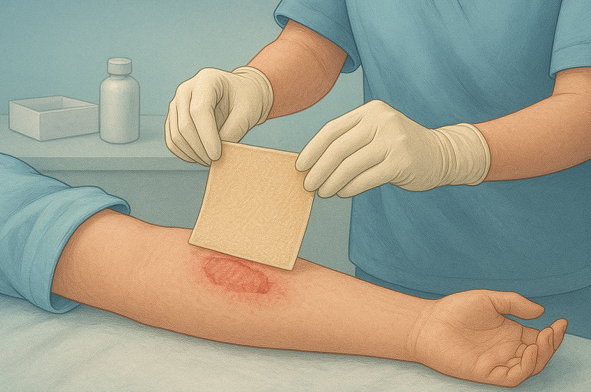
Every wound tells its own story, a kitchen knife’s quick slip, a stubborn diabetic ulcer that refuses to close, a surgical incision hidden beneath gauze. Beneath those dressings, the body quietly wages a complex battle for healing.
That struggle is soon over for some people. The skin closes, the pain disappears, and life goes on. However, for millions, particularly those with persistent wounds, healing is a game of waiting. The natural repair mechanism of the body halts. Cells lose direction. Inflammation lingers.
Traditional dressings protect, but they don’t instruct. They can dress a wound, but not train the cells to reconstruct. That is where ECM dressings, which is also known as Extracellular matrix dressings, come in. They don't just cover wounds. They communicate with them.
These advanced biomaterials offer the same biological signals that natural tissues have in repairing themselves. They combine modern medicine with the intelligence that the body has, and they assist the wounds to heal as nature intended. It starts inside the body and then spreads to the outside.
Preclinical evidence indicates that dECM dressings may accelerate re-epithelialization by approximately 20–50%, contributing to a shorter healing timeline in chronic wound cases.
What makes a good ECM dressing? And how can clinicians tell if they’re using one that truly works with the body, not just on it?
What is ECM Dressing?
To comprehend what constitutes a great ECM dressing, it is useful to first have an idea of what the extracellular matrix (ECM) is.
Imagine that the ECM is the scaffold of the body, a combination of proteins, collagen, and growth factors that provide the structure of tissues and give signals to the adjoining cells. It is not merely a passive framework, but it is an active participant in regeneration.
In case of formation of a wound, the surrounding ECM is destroyed. In its absence, the skin cells are devoid of their GPS; they don’t know where to go or what to develop. The healing process becomes slower and scar tissue forms instead of actual regeneration.
When skin is damaged and loses its natural extracellular matrix, ECM dressings help rebuild that structure. These biologically-derived scaffolds are made from processed human or animal tissues, such as porcine or bovine sources, and are designed to preserve key structural proteins and signaling molecules found in healthy skin. By providing this natural framework, ECM dressings support cell attachment, tissue remodeling, and improved wound healing. (https://journals.sagepub.com/doi/10.1177/20417314241300386).
Simply stated, it provides the wound with a roadmap to recovery.
The cells move onto the dressing, identify its recognized signals, and commence the formation of new ECM themselves. The dressing over time becomes degraded when the real tissue substitutes the dressing, a transference between synthetic and self.
This is the difference between covering a wound and coaching it back to health.
What Makes a Good ECM Dressing?
Not all ECM dressings are equal. An effective one has to be a combination of biology, engineering, and clinical performance. These are the most important features that are to be considered by clinicians:
⦁ Biocompatibility and Purity
This is the initial principle of any biomaterial: it has to speak the language of the body.
A high-quality ECM dressing preserves key structural proteins like collagen, elastin, and laminin while removing cellular components that may provoke an immune response. Through a process called decellularization, the natural architecture of the matrix is maintained, and all DNA is effectively cleared, leaving a biologically compatible scaffold for healing. (https://pmc.ncbi.nlm.nih.gov/articles/PMC9326521/).
This has a clinical implication of reduced inflammation and quicker adaptation to the host tissue. Too chemically processed or sterilized dressings can cause loss of these vulnerable bioactive cues, and thus decrease effectiveness.
Structural Integrity and Porosity
. The layout of the ECM is its trademark.
A high-quality dressing needs to replicate the 3D structure of native-tissue, fibrous, porous and supportive.
Why does this matter?
Because diffusion is vital in cell migration, and the diffusion of nutrients.
An ECM dressing is porous and also allows the passage of oxygen, fluids, and growth factors, but provides fibroblasts and keratinocytes with a scaffold to adhere to. This facilitates the process of angiogenesis, or the creation of new blood vessels, and eventually, the process of healing.
Too thick, and cells are unable to penetrate. Excessively loose, and the scaffold collapses. Balance is the best thing; a natural, sponge-like texture that feels almost alive to the touch.
⦁ Bioactivity and Growth Factor Retention
This is where ECM dressings really make synthetic dressings pale in comparison.
When done correctly, the decellularization approach leaves behind growth factors, biochemical messengers such as VEGF, FGF, and TGF-β that instruct tissue repair.
Good ECM dressing is a reservoir of these signals, and over time, the signals are discharged into the wound bed. This constant release attracts the macrophages, stimulates fibroblasts, and promotes the structural collagen deposition.
Concisely, it is not simply a scaffold; it is a smart scaffold.
⦁ Controlled Degradation Rate
The ECM dressing ought to disintegrate according to the body repair process.
If it breaks down too quickly, it becomes disorganized before the tissue can be regenerated. Slowly, it may inhibit natural remodeling.
Most suitable ECM materials, such as porcine small intestinal submucosa (SIS) or urinary bladder matrix (UBM), break down over time and sustain mechanical support and biochemical cues until the wound spontaneously seals (Cleveland Clinic, 2025).
Imagine them to be training wheels, which are removed only in the case of a wound being prepared.
⦁ Resistance to Infection and Inflammation
The environments of the wound are usually aggressive; they are damp, bacterial, and inflamed. An effective ECM dressing not only survives these conditions, but also makes them better.
Research indicates that ECM materials possess antimicrobial properties of nature and can regulate the inflammatory reaction by promoting the replacement of pro-inflammatory M1 macrophages to regenerative M2 macrophages (Frontiers in Immunology, 2024).
This immunomodulatory action prevents chronic inflammation as well as enhances a quicker and cleaner healing reaction, essential in diabetic ulcers and surgical injuries alike.
⦁ Ease of Use and Clinical Versatility
Lastly, though a sensible but considerable factor, is the extent to which clinicians can apply it easily.
The optimal ECM dressings can be purchased in various forms: sheets, powder, gel, or foam, and this gives an opportunity to use the dressings in accordance with the type of wound. They are also supposed to be simple to store, cut, and hold without any special tools.
Form factor flexibility has extended clinical application from chronic ulcers to trauma to reconstruction (JAMA, 2023).
How ECM Dressings Work
At the microscopic level, ECM dressings do much more than occupy space. They talk to cells.
The ECM engages integrin receptors of cell membranes when applied to a wound bed. This activates the signal transduction that leads to cell motions, growth, and differentiation.
The following is the process:
- Cell Migration: Fibroblasts and keratinocytes move into the ECM scaffold.
- Angiogenesis: The matrix releases factors that stimulate new blood vessel growth.
- Collagen Remodeling: Cells begin producing their own ECM proteins, gradually replacing the dressing.
- Tissue Integration: The scaffold degrades naturally, leaving behind healthy, organized tissue.
It is an ideal biological switch; the dressing begins the process, the body completes it.
This is the reason why clinicians are increasingly viewing ECM as treatment, rather than a substance.
The Takeaway
The best ECM dressing does not simply close wounds, but it educates them to heal.
It replicates the innate matrix of the body, provides biochemical signals, regulates inflammation, and facilitates cell-mediated regeneration. When selected and utilized properly, it can change an otherwise passive bandage into an active healing system.
To the clinicians, knowing these features is not only good science, but good medicine. Since all wounds are worthy not only to heal, but also to restore what was lost.
Frequently asked questions (FAQ)
⦁ What do you mean by an ECM dressing?
ECM dressing is a wound dressing that is manufactured using natural tissues. It offers structural assistance and biochemical cues that influence the healing of the body.
⦁ Why is it not like an ordinary dressing?
As compared to synthetic dressings, which only act as shields to the wound, ECM dressings interact with cells, providing them with regeneration rather than merely with closure.
⦁ Can ECM dressings be used with every patient?
Yes, the majority of them are biocompatible and tolerable. Nevertheless, clinicians must never overlook the possibility of allergies or sensitivities to the source of the tissue (porcine or bovine).
⦁ How long does an ECM dressing stay on a wound?
It depends on the product and type of wound, but generally it takes several days to several weeks duration; sufficient time to allow cell infiltration and remodelling.
⦁ Is it possible that ECM dressings minimize scarring?
Yes. By guiding organized tissue regeneration rather than random collagen deposition, ECM dressings often result in smoother, less visible scars.
⦁ Do ECM dressings need to be changed frequently?
No. Since they integrate with tissue and degrade naturally, they require fewer dressing changes, reducing pain and disturbance to the wound bed.


More from KessGen Insights.
.webp)


.webp)
To unlock the full power of the ECM and pioneer a new era of regeneration.


.webp)
.png)
.webp)

.png)