From Burn Injuries to Surgical Scars: How ECM is Redefining Healing Outcomes
Discover how ECM alters the dynamics of recovery from burn injuries to surgical wounds, resulting in faster healing, minimal scarring, and improved tissue regeneration.

Burn and post-surgical scars represent some of the most difficult wounds to treat in present-day medicine. These types of injuries can result in severe functional and aesthetic outcomes, retarded wound closure, and occasional psychological trauma. In the past, treatment modalities have encompassed conventional dressings, skin-grafts, and topical therapy. Yet, the practice of alternative modalities is making significant impacts that have surpassed traditional methods of care. Especially, the use of extracellular matrix technologies is revolutionizing healing results for patients living with burns and post-surgical scars.
Understanding Burn Injuries and Their Healing Challenges
Burns can be categorized by depth from superficial (first degree) and deep (third degree, full thickness). No matter if it is mild or severe, they break the skin’s defense barrier and expose the underlying tissue as well as initiate complicated inflammatory and reparative reactions.
Burn wound healing is slow and frequently associated with complications such as infection, hypertrophic scarring, and contractures. Historical treatments, such as gauze dressings or man-made bandages, have been utilized, which essentially function to protect and control moisture of the wound but do little to actually promote healing of the living tissue.
ECM: The Biological Scaffold for Healing
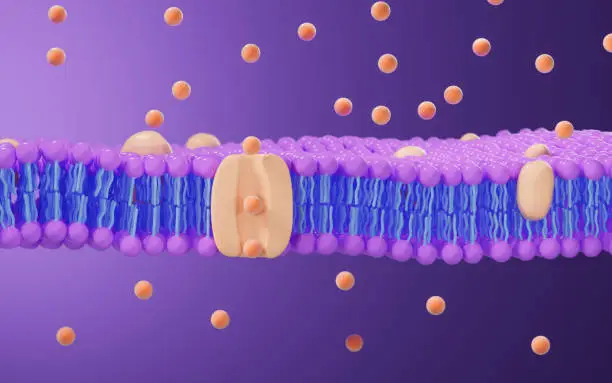
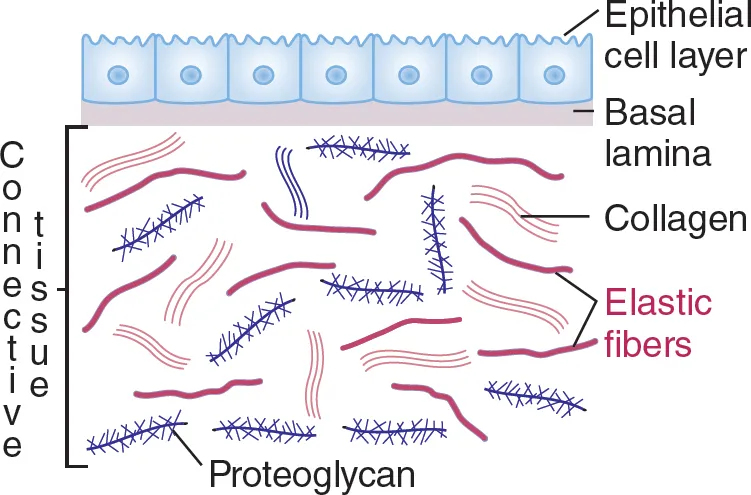
The extracellular matrix, also known as the ECM, is a natural support structure for cells and tissues everywhere in the body. In wound healing, ECM provides a scaffold that directs the body's cells to heal and regenerate tissue in a manner that contributes to organization and function. Further studies confirm this (ECM)-based scaffolds are one of the most promising biomaterials for skin wound healing, some of which, such as acellular dermal matrix, small intestinal submucosa, and amniotic membrane, have been clinically applied to treat chronic wounds with acceptable outcomes.
ECM is made of proteins such as collagen, glycosaminoglycans and growth factors, all of which are very important in finding cellular responses, trying to attract stem cells and inducing for the formation of new blood vessels.
ECM in Burn Injury Management
The traditional approach to burn wounds has always been the management of infection, inflammation and wound coverage. Though the steps are crucial, they don’t actively rebuild tissue architecture. ECM provides a new perspective on this approach.
Recent clinical studies have also revealed that ECM-based burn wound therapies promote faster tissue closure as compared to commercially available dressings. This is especially true in the case of deep partial-thickness and full-thickness burns, where the rates of infection and scarring are significant. According to a study published on 15 Nov 2024, Extracellular matrix (ECM) derived components have emerged as a source for the engineering of biomaterials capable of inducing desirable cell-specific responses and one of the most promising biomaterials for burn wound healing.
From Acute Wounds to Surgical Scars
Burns present one extreme of the complex wound, but surgical scars are another site at which ECM is demonstrating transformative potential. All surgical procedures, whether elective or emergency, disrupt the skin and subcutaneous structures. Scars may develop despite excellent suturing and post-operative management, occasionally resulting in aesthetic and functional problems.
In surgical wound management, the regenerative capacity of ECM is used to reduce scarring. ECM as a biological scaffold supports the organized formation of new tissue and minimizes inflammatory response while facilitating more rapid incorporation of new tissue. Post-operatively, ECM-treated patients have usually achieved acceptable skin texture, reduced pigmentation differences and enhanced elasticity as opposed to the traditional wound care techniques
Mechanisms Behind ECM’s Effectiveness
The efficacy of ECM with regard to burn wounds and surgical scars is attributed to various biological mechanisms:
- Cell Recruitment: ECM is rich in bioactive molecules that recruit stem cells, fibroblasts and endothelial cells into the wound bed, promoting tissue regeneration.
- Promoting angiogenesis: ECM facilitates the development of new blood vessels in the regenerating tissue, thereby ensuring that it gets enough nutrients and oxygen.
- Anti‐Inflammatory Effects: ECM can influence inflammation and treated patients present reduced levels of chronic inflammation, which often results in excessive scarring.
- Structural Guidance: The collagen and other structural proteins contained in the ECM direct the alignment of new tissue so that it grows as normal architecture, not as a disordered scar.
- Native Tissue Ingress: ECM is progressively replaced by the body's cells and becomes an integrated part of the revived tissue (as opposed to a foreign grit).
These activities together result in more rapidly healed, better cosmetically appearing wounds.
ECM vs Traditional Wound Dressings
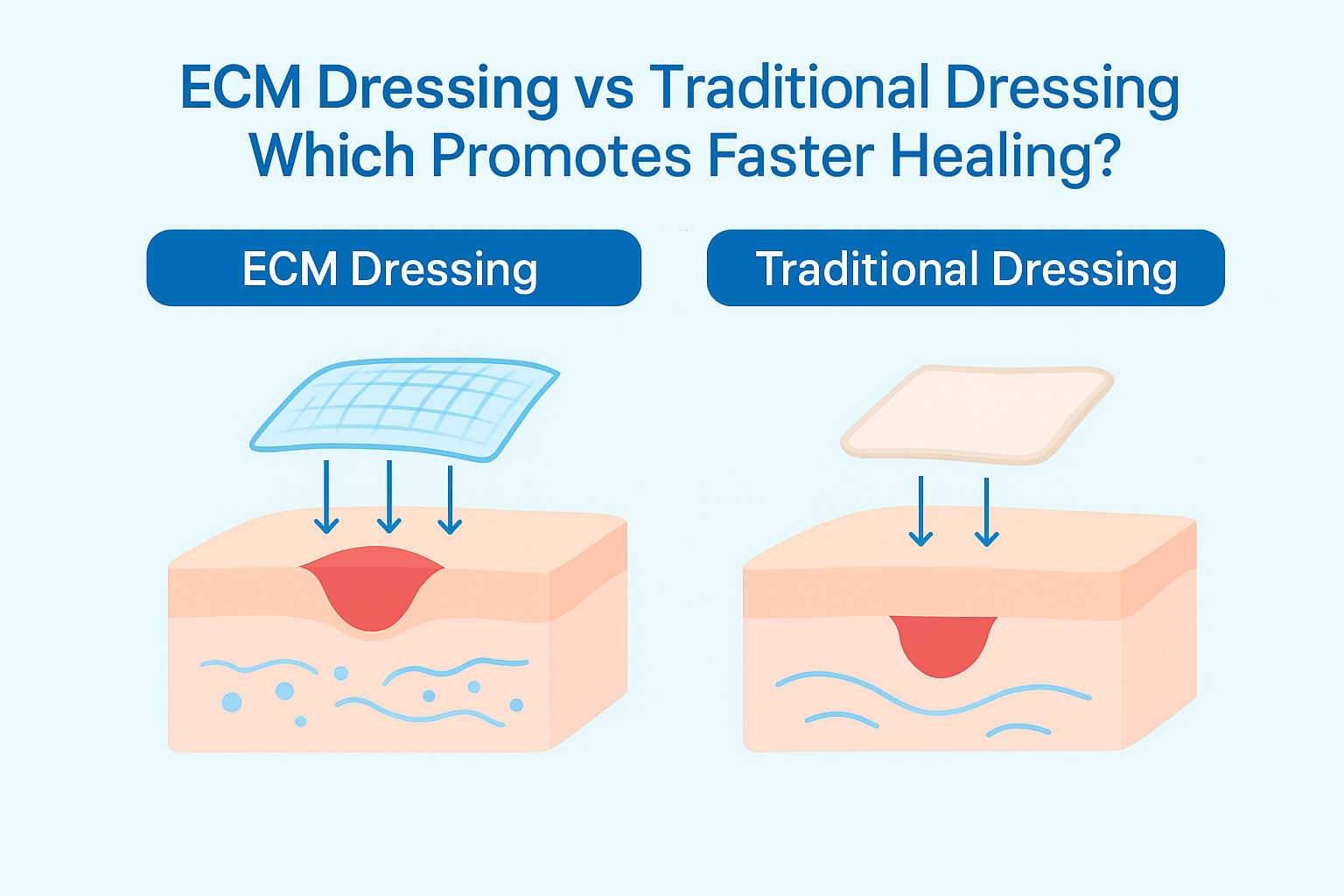
Conventional wound-care dressings work predominantly as a cover and to preserve the moisture of the wound, but they lack other bioactive properties. Although it is almost impossible to do without these products in the primary care of a wound, they are not found to be actively regenerative. In contrast, ECM serves as a regenerative template, providing biochemical cues and architectural support to direct the healing response of the body.
Likewise, during surgical wound healing, use of ECM may limit formation of firm hypertrophic scars, which frequently form when normal postoperative care is followed. By fostering orderly tissue development, ECM helps the new skin become more pliable and closely resembles the surrounding tissues.
Advancing Healing: The Future of ECM
The advantages of ECM in treating burn wounds and scars are obvious, and new developments continue to expand the potential for better patient outcomes. Although cost and human- or animal-derived tissues are still limitations, these issues push regenerative medicine forward in finding innovative solutions.
Synthetic and hybrid ECM materials designed to replicate biological and structural features of natural ECM have been developed by researchers as potential safe, scalable, and efficient alternatives to naturally derived materials. Advanced 3D printing and bioengineering approaches are facilitating the generation of patient-specific ECM scaffolds that replicate complex wound shape and size, resulting in an accelerated healing process with improved functional and aesthetic results.
Furthermore, the use of ECM in association with other regenerative therapies, including stem cells, growth factors and gene-based approaches, is proving to be promising for promoting an even faster healing response, reducing scarring, and promoting uniform functionality. With these advances, the application of ECM-based approaches is not only simply augmenting wound healing but revolutionizing it, providing much-needed possibilities in rapid and complete tissue repair following burn injury or surgical incisions.
Patient Outcomes: Burn Recovery and Scar Improvement
The ultimate aim of the ECM in either burn or surgical wound care is not only to facilitate more rapid healing but also better outcomes. Scar therapy for Burn and surgery scars can improve functionality, aesthetics and self esteem. Now the biologically active scaffold encourages tissue regeneration not scarring and is just like real skin.
For burned patients, ECM may lead to hypertrophic and contracture scar reduction with la esser need for further surgeries. It heals more quickly and in a more organized manner, which reduces the risk of infection and complications. Children benefit most in when ECM spares invasive with preserved growth and function.
Frequently Asked Questions:
1. What are the Functions of ECM in Wound Healing?
ECM helps to reconstruct tissues by guiding cell growth, arranging collagen and enhancing blood vessel formation, resulting reconstitution of the skin's structure and strength.
2. How do burn wounds heal?
Burn wounds are resolved in four stages, which overlap, namely hemostasis (clot formation), inflammation (cleaning up cellular debris and fighting infection), proliferation (collagen is laid down with new tissue growing) and remodeling (reinforcement of tissue as collagen realigns).
3. What Is a Type 4 Burn?
A Type 4 burn is the most serious, reaching from skin to muscle, ligaments, or bone. Nerve endings are burnt, and so there may be little initial discomfort. They are typically treated with skin graft surgery and heal very poorly without treatment.
4. What Are the Changes in ECM in Healing After Injury?
Following injury, ECM is remodeled in a dynamic manner: degraded matrix fractions are removed, bioactive molecules are released to attract cells and new ECM proteins such as collagen and elastin may be deposited. This mediates cell migration, tissue repair, angiogenesis and facilitates the restoration of normal tissue architecture and function.
5. What Is the Progression of Surgical Scar Healing?
The process of surgical scar healing involves inflammation, proliferation and remodelling. First, the wound is cleaned and covered, then collagen and new tissue develop; Finally, the scar matures and remodels to improve its appearance and function.
Conclusion
The picture of wound care is changing, and ECM also plays a leading part in it. Whether it be severe burn wounds or postsurgical scars, where ECM provides a biologically active scaffold that allows faster healing in a more organized and better-looking way. Contrary to conventional dressings, which are mostly protective and for isolation of the wound environment, ECM interacts with the body’s own repair capabilities by releasing active molecules so as to decrease complications and improve long-term results.
In conclusion, ECM is more than just a dressing; it’s a breakthrough in wound care that’s redefining how we understand recovery from burns and surgeries. The future of healing lies in approaches that harness the body’s natural regenerative power and ECM stands at the forefront of this transformation.


More from KessGen Insights.
.webp)

.webp)
To unlock the full power of the ECM and pioneer a new era of regeneration.


.webp)
.png)
.webp)

.png)