ECM Dressing vs Traditional Dressing: Which Promotes Faster Healing?
Learn how ECM dressings speed up healing compared to standard dressings through the promotion of tissue remodeling, angiogenesis and accelerated wound recovery.

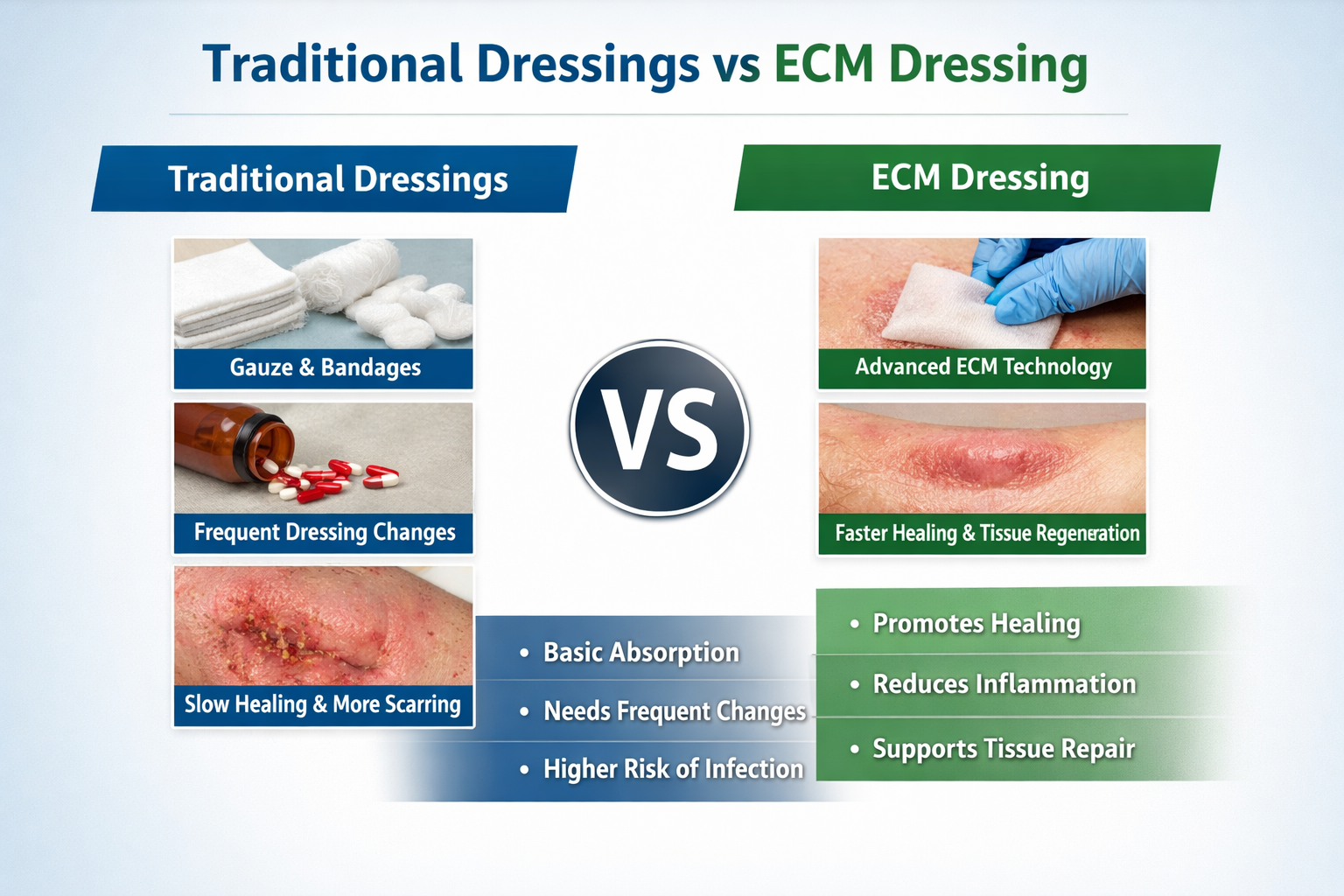
The current era of medicine has become success-oriented, in which everyone tries to develop potential accelerants for better treatment and faster healing for wounds. For decades, gauze, foams and hydrocolloids pasted over wounds were the mainstays of wound care. But with the development of regenerative medicine, a new option has become available, which is Extracellular Matrix (ECM) dressing.
The comparison of ECM dressing vs traditional dressing has become one of the most discussed topics in wound care. Both approaches have their strengths, but the real question is: which one promotes faster and more complete healing? Let’s explore this debate in depth.
Understanding Traditional Dressings
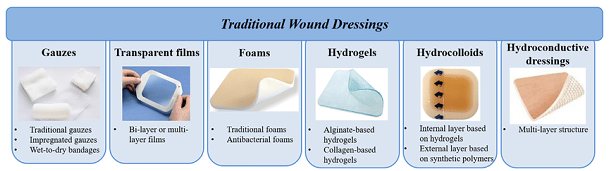
Before we get to ECM, let’s first look at how traditional dressings operate. A typical dressing is intended primarily to protect the wound, to absorb exudate and maintain a moist environment, which promotes the body’s own natural healing. They are available as gauze, alginates, hydrocolloids, and foams.
They are inexpensive, easy to use and can be used for small wound care or post-operative protection. But the problem with an ordinary dressing is that it's a passive one. It isn't going out of its way to regrow tissues or grow cells. Instead, it just acts as an outside shield for dirt while the body takes on the job of treating the wound underneath.
The Shift Toward Advanced Healing Solutions
The conversation about ECM dressing vs traditional dressing has opened many eyes to the demand for innovative treatments that address more than just wound coverage. Long-term (chronic) wounds like those in people with diabetes, venous leg ulcers, and pressure sores can get worse instead of healing with regular bandages. Conventional dressings keep in moisture but lack the biological signals needed for tissue repair.
In contrast, ECM-containing dressings provide a solution to these unmet needs. They directly promote cellular communication and direct renewal, assisting wounds in progressing out of the inflammatory stage. That accelerates both closure and tissue-building, which means lower risk of infection, and is a significant leap in modern wound care.
Introducing ECM Dressings
A new frontier in wound management involves using dressings produced from biological tissues such as porcine or bovine dermis, the dressings are subjected to decellularization in order to remove all cellular contents in tissue, while retaining the native structure of the matrix. A study published on 12 June 2025 shows “Preclinical studies have demonstrated that dECM-based dressings can enhance the re-epithelialization rate by 20–50% and shorten the healing cycle of chronic wounds by 40%.”
This collagen-elastin-growth factor-enriched matrix is a biological matrix that supports tissue regeneration. The ECM dressing communicates directly with the body’s cells and even instructs them to migrate, multiply and grow new tissue when they come in contact with a wound. ECM dressings are not passive, like most traditional dressings; instead, they become involved in the wound healing response.
The bottom line using the ECM dressing vs traditional dressing is that: Traditional dressings protect ECM dressings restore.
How ECM Dressings Accelerate Healing?
The therapeutic action of ECM dressings is based on the principles of regenerative biology. When an ECM dressing is applied to a wound:
- It serves as a physical template, which directs cells to move into the damaged region.
- It stimulates angiogenesis which develops new blood vessels to bring oxygen and nutrients.
- It has some anti-inflammatory properties, which can help the wound transition quickly from the inflammatory phase to the proliferative phase.
- It promotes collagen production, resulting in stronger new tissue that’s more functional.
The rate of wound healing becomes faster and more complete through these biological interactions, as opposed to the slower passivity observed in traditional dressings.Interestingly, in 2020 it was published that the precursor to collagen, pre-collagen, is regulated by the 24-hour circadian cycle. Elastin, on the other hand, comprises 0.6–7.9% of the dermal ECM depending on anatomical location, gender, and age.
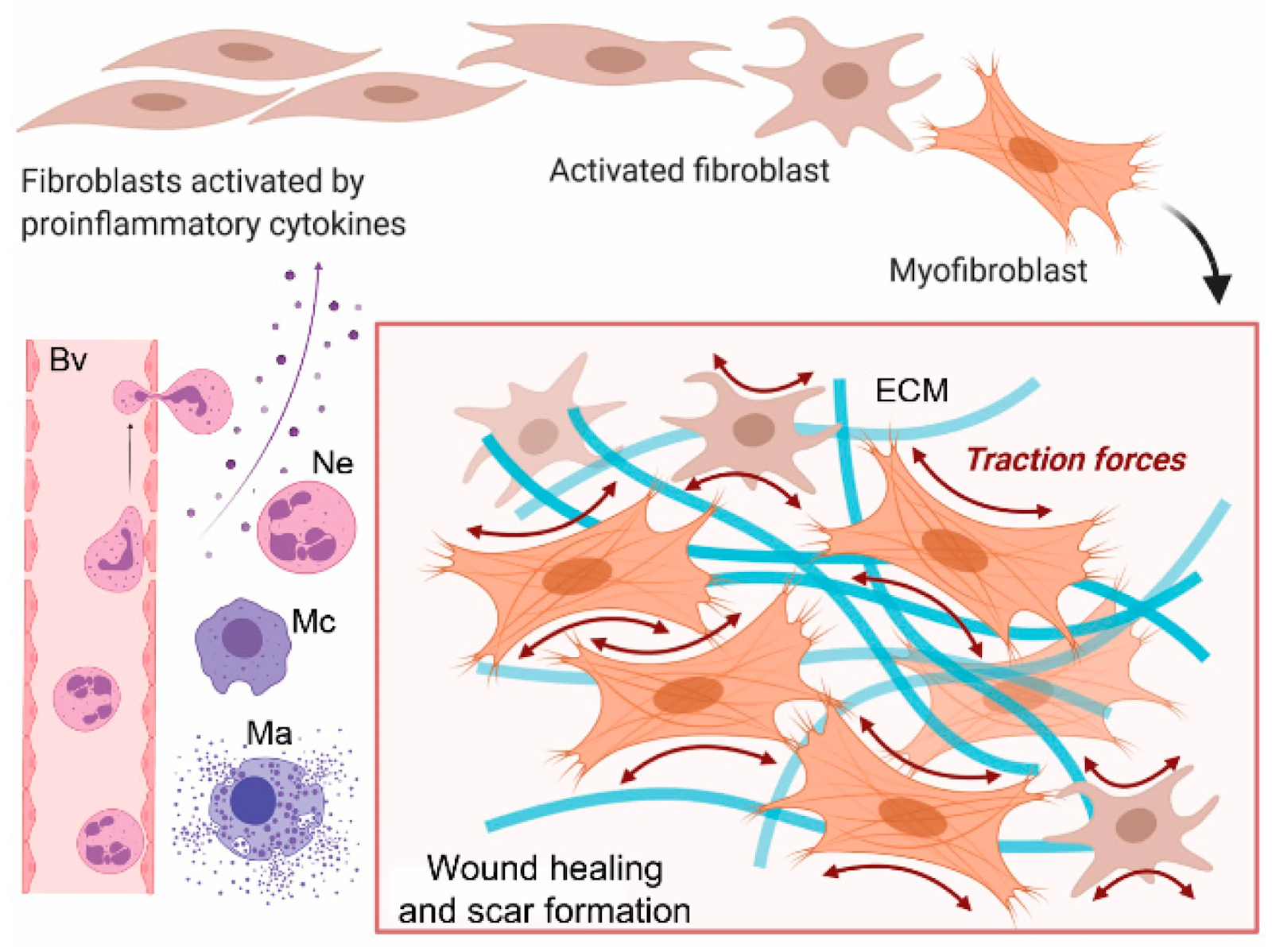
Previously published studies have supported the ECM in modulating wound healing by regulating biochemical pathways and biomechanical signaling pathways. The ECM directly modulates aspects of cell behavior, including adhesion, proliferation, migration, and survival

ECM Dressing vs Traditional Dressing: A Comparative Overview
Traditional Dressing
- Protects the wound and absorbs exudate but does not promote granulation.
- Acts via passive healing to keep the area moist and protected.
- Healing is moderate to slow and the concentration of chronic wounds.
- Best for minor or temporary wounds like cuts and scrapes.
- Creates a guard against infection but does not increase natural immunity.
- Often becomes a stiffened scar.
- The cost may initially be less but they can need changing more often and require extended treatment.
ECM Dressing
- Tissue regenerates and healing occurs at the cellular level.
- Acts via bioactive signaling and remodeling of tissues.
- Rapid healing is particularly successful in the treatment of chronic and difficult wounds.
- Perfect for deep, non healing or diabetic lesions.
- Encourages infection-healing tissue to develop, without scars.
- Generates replacement skin close to the original tissue quality instead of scar tissue.
- More expensive up front, but cost-effective over time as recovery times are shorter.
Clinical Evidence Supporting ECM Dressings
Clinical evidence has demonstrated that ECM dressings may facilitate healing and enhance tissue quality of chronic and difficult-to-treat wounds. In patients with diabetic foot ulcer or venous leg ulcers, the healing rate of ones receiving ECM dressings was 40-60% higher than that of their counterparts treated by traditional dressing.Further research shows,”Twenty percent of patients experience 10 or more ulceration episodes, and 9.3% develop more than one ulcer in both legs.Of all vasculogenic ulcers, 56%–70% are of a venous origin, 10%–20% are arterial, and 9%–26% have mixed etiology. Approximately 1%–3% of the population is affected, starting from 14 years of age, and the prevalence grows with age.”
Additionally, ECM-treated wounds frequently regenerate tissue that looks a lot like normal skin as opposed to the fibrotic or scar-like tissue generally seen with traditional dressings. This results in not only better functional and cosmetic outcomes.
ECM vs Traditional Dressing The ongoing debate in the ECM dressing vs traditional dressing argument, there is a strong clinical case for ECM when healing has stabilized or where tissue regrowth is most important.
Cost and Long-Term Benefits
ECM dressings may appear more costly at first glance. However, in the broader healthcare context, they often prove to be more cost-effective. Faster healing means fewer hospital visits, fewer dressing changes, and reduced risk of infection, all of which lower overall treatment expenses.
Standard wound dressings may look cheap, but when wounds fail to heal and remain open for months, the cost of care is greater than that of one ECM-based intervention. For this reason, ECM dressings are a wise decision for complex wound care from both clinical and economic perspectives
Challenges and Future Directions
Despite the success of ECM dressings, some issues still exist. They need to be handled with care, stored well and applied by professionals sometimes. Furthermore, they may not be easily available in low-resource clinical settings.
That has encouraged development of artificial substitutes for the ECM that will do the same things using engineered materials, researchers say. These advances could make ECM wound care affordable and accessible to anywhere in the world. ECM technologies are expected to gain an even stronger position over traditional dressing methods as regenerative medicine continues to advance.
Real-World Applications
The use of wound healing products based on the ECM has increased in hospitals, wound care centers and rehabilitation facilities for treating chronic wounds (such as burns) and post-surgical stimulation. The majority of practitioners are experiencing faster healing, less complication and the patient is reporting greater comfort.
Patients with diabetic ulcers typically see dramatic improvement in weeks after months of little healing using conventional therapies. These real world results add to the evidence base that ECM dressings represent not just a theoretical advancement, but an advance in clinical treatment.
The Verdict: Which One Enables a Quicker Recovery?
After reviewing the evidence, the question of ECM dressing vs traditional dressing is obvious. Conventional dressing materials are very important for daily wound care; they offer simple, inexpensive treatment for small, uncomplicated lesions. But when speed is the ultimate aim of healing and reducing recovery time, then ECM dressings are head-and-shoulders above conventional ones.
ECM dressings don’t passively protect your wound; they help bridge the gap between a chronic wound and an actively healing one. They inspire cell communication, promote angiogenesis and direct the development of new tissue that is stronger and more durable. This characteristic makes ECM the material of choice for managing chronic wounds and advanced wound care.
Frequently Asked Questions:
⦁ What Is the Best Dressing to Promote Healing?
Moist wound dressings like hydrocolloids or hydrogels are best for promoting healing.
⦁ What Kind of Dressing Is Preferred for Wound Healing?
Dressings that maintain a moist environment and protect from infection are preferred.
⦁ Which Type of Dressing Is Most Beneficial in Keeping a Wound Moist and Providing a Barrier Against Disease Transmission?
Synthetic dressings such as hydrocolloids, foams, and films.
⦁ What Are the Benefits of Synthetic Dressings?
They keep wounds moist, protect from infection, and support faster healing.
⦁ What Are the 5 Rules in Applying Dressing?
Use sterile saline to clean the wound and select an appropriate dressing for wound type and exudate, in general keep it moist to assist healing keeping loose but not tight wrap it in position.
Conclusion
The discussion of ECM dressings versus conventional dressings reflects a broader shift in how modern medicine approaches the healing process. Conventional dressings have served for hundreds of years, but the future is all about ECM technology and regenerative science-based/bio-ultra medical precision.
With further research and development, ECM dressings are likely to be part of a new standard of care for chronic and non-healing wounds. They represent a transition from pure wound management to tissue and function regeneration.
But in the end, each type of dressing has it place, so when choosing which to use, you need to ask yourself which level of healing they provide, regular or advanced and with speed too. Given this background, ECM dressings prove to be more effective when compared to traditional dressings.


More from KessGen Insights.

.webp)


.webp)
To unlock the full power of the ECM and pioneer a new era of regeneration.


.webp)
.png)
.webp)

.png)