
How the Extracellular Matrix (ECM) Supports Stem Cell Regeneration, and the Role of PRP
Learn about extracellular matrix stem cell regeneration and the use of PRP. Get to know about ECM, stem cells, and PRP’s effect on regenerative medicine.

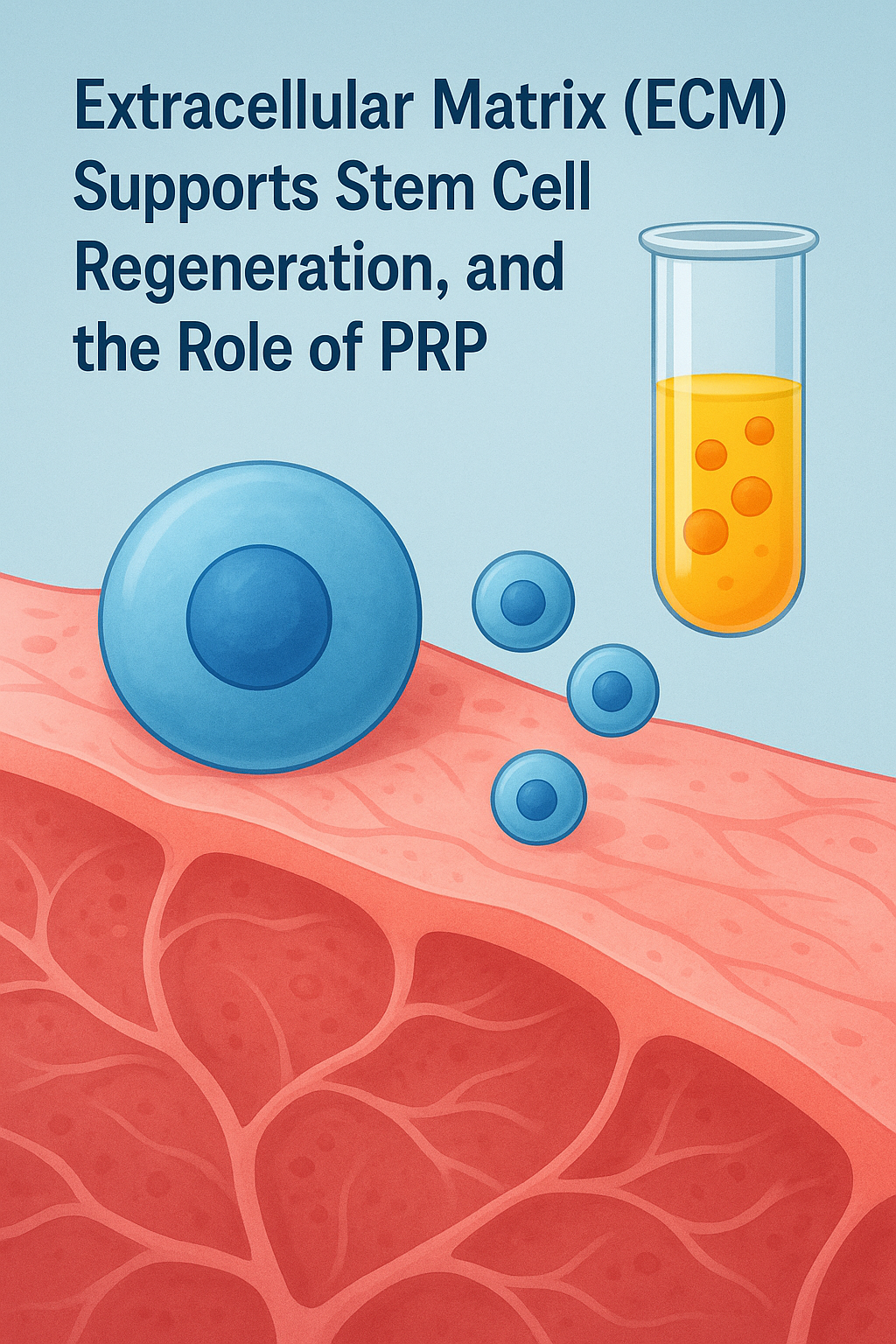
The Blueprint of Healing
All the wounds, bruises, or broken bones that your body heals start with something invisible yet powerful, the extracellular matrix (ECM). It is not just the medical network needed to keep your tissues together. It teaches cells how to heal.
If stem cells are the body’s builders, then the ECM is the blueprint that shows them where to go and what to become. They are changing the way regenerative medicine functions, together with platelet-rich plasma (PRP), the natural source of growth factors in the body.
According to the researchers' opinion, understanding this collaboration can lead to the next level of tissue regeneration, in which the body not only heals but also regenerates more intelligently, stronger, and more naturally than ever.
(Frontiers in Regenerative Medicine, 2025; Cleveland Clinic, 2024)
What Is the Extracellular Matrix?
A 3D web of protein, sugar, and signaling molecules, this is how you can imagine ECM.
Biological scaffolding is not the only thing. It is a dynamic communication system that links all the cells in your body.
ECM consists mostly of collagen, elastin, fibronectin, laminin, and proteoglycans. These elements create a dynamic but strong structure that provides the tissues with their structure in addition to affecting the cellular behavior.
NIH studies have indicated that the ECM regulates everything, including wound healing, up to the development of organs. It offers biomechanical and biochemical cues, which instruct cells to migrate, divide, or mature based on the body's requirements.
Just imagine it to be a plant soil.
Even the most healthy seed will not grow in the wrong soil. On the same note, the stem cell cannot regenerate quickly and flourish in the absence of the appropriate ECM.
Recent investigations by Nature Biomedical Engineering have demonstrated that the ECM serves as a biological GPS, which informs cells where to settle and become specialized.
The Connection Between the Extracellular Matrix and Stem Cells
The ECM is not a background as far as stem cell regeneration is concerned.
It is a conductor who composes all the notes of all cell behavior.
Here's how it works:
- Structural Support: ECM offers a physical habitat in which stem cells attach and proliferate.
- Biochemical Signaling: It transmits molecular signals via the integrins and growth factors that act on gene expression.
- Mechanical Cues: Elasticity or stiffness of the ECM assists the stem cells in making a choice on whether they should form bone, muscle, or cartilage.
Research in PubMed shows that how stiff the extracellular matrix (ECM) is can decide what mesenchymal stem cells (MSCs) become, either bone-forming cells or fat-storing cells.
This means the ECM isn’t just holding cells, it’s training them.
It provides a supportive microenvironment, the so-called stem cell niche, which balances between renewal and differentiation.
This bioactivity of the ECM makes it an attractive choice for regenerative medicine. As a result, researchers are able to engineer ECM-inspired biomaterials that faithfully adapt to the body’s native environment. These materials help lab-grown tissues grow and function more like real human tissues. (Frontiers in Cell Biology, 2025)
PRP: The Spark That Accelerates Regeneration
The ECM is the structure, and the stem cells are the constructors; therefore, platelet-rich plasma (PRP) is the power that drives the whole system.
PRP is a condensed version of a patient's liquid blood, full of platelets, cytokines, and developmental elements, such as PDGF, VEGF, and TGF-β.
PRP is known to promote the regeneration of tissue because it triggers the body to do what it is capable of naturally, according to the Cleveland Clinic.
When PRP is placed in an ECM-bearing field, something extraordinary occurs:
- Growth factors are bound to the proteins of the ECM, forming a sustained release mechanism.
- These are signals to the area that bring stem cells.
- The stem cells then bind, replicate, and begin to secrete new ECM proteins; the regeneration process then continues.
Research conducted in Frontiers in Bioengineering and Biotechnology validates that when ECM scaffolds are used together with PRP, it improves cell proliferation, angiogenesis, as well as tissue integration.
This teamwork creates a healing cycle: first, the ECM helps stem cells grow; then PRP boosts them even more; and finally, the cells make more ECM, continuing the process.
ECM + Stem Cells + PRP: The Regenerative Symphony
When all these three forces are combined, the regeneration is not only accelerated but also smarter.
Here's how:
- ECM offers biochemical direction and structure.
- The cues are interpreted by the extracellular matrix stem cells and result in tissue reconstruction.
- PRP enhances communication and expansion.
In clinical research, the patients who were treated with ECM-PRP-stem cell combinations had shorter healing durations, less inflammation, and enhanced tissue incorporation compared to conventional grafts.
Such a synergy is under test in several areas:
Orthopedics: healing cartilage and bone fractures.
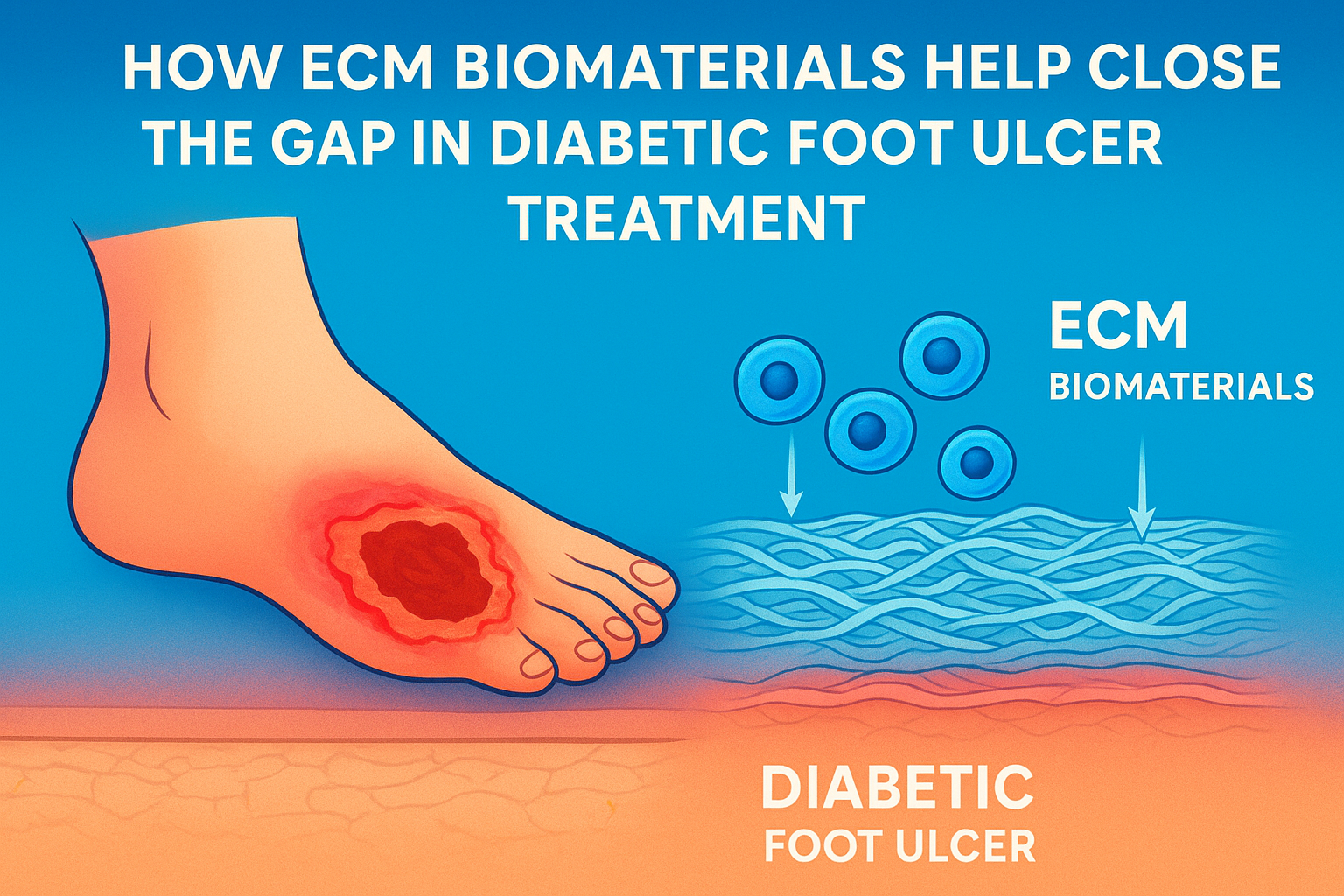
Dermatology: healing burns and long-standing ulcers.
Aesthetics: regenerating skin with synthetic collagen rather than natural one.
Cardiology: enhancing the healing process of the supporting tissue of the heart following injury.
Every victory serves as a confirmation of the same idea, that regeneration does not consist in adding cells, but in a proper environment in which the cells can evolve.
(Frontiers in Regenerative Medicine, 2025; JAMA Network, 2024)
How Researchers Are Engineering the ECM for the Future
Bioengineers nowadays are being taught how to make copies of the matrix of nature. They can create tissue scaffolds that mimic living environments by using decellularized ECM (dECM) of tissues and 3D bioprinting.
Recently, a group of scientists at Stanford Medicine has shown that dECM hydrogels in combination with mesenchymal stem cells have the capacity to achieve better cartilage repair than traditional implants.
On the same note, other laboratories in the world are producing ECM-inspired biomaterials capable of degrading as they are replaced by new tissue. This way, the matrix that would have been engineered will eventually be replaced by the body tissue. (MDPI Bioengineering, 2024)
This principle is referred to as biomimetic regeneration, and it is the key to the future of medicine. We are not imposing healing by means of surgery or implants on our bodies, but we are just educating the body to heal itself more.
Challenges Ahead
Naturally, development is associated with obstacles.
To achieve successful outcomes of the research, the researchers make sure that the ECM materials are safe and biocompatible, as well as immune-reaction free.
Another challenge is to standardize PRP concentration and the quality of ECM across the laboratories.
Yet innovation continues. The 3D printers and microfluidic systems, which have been assisted with AI, are currently aiding scientists to reproduce the microstructures of the ECM more precisely than ever before.
The FDA is also in active development of systems to categorize and control ECM-derived biomaterials, which is a key step in converting them to clinical use (FDA Guidance).
The next decade will probably see the development of the so-called on-demand regenerative kits, ready-made ECM-PRP-stem cell mixtures tailored to the individual patient, as Nature Biotechnology states.
The Future of Collaborative Healing
We are on a new chapter of regenerative medicine, one where the extracellular matrix stem cells are the key point of consideration.
The ECM is no longer just a biological glue; it is a smart, responsive environment that works together with the natural intelligence of the body. Combined with stem cells and PRP, it creates a three-tier system that does not merely patch up the injuries; it reinvents the process of healing.
Companies are taking the lead in this change by creating next-generation ECM biomaterials that would improve communication between stem cells and provide faster healing. It is a future in which the defective tissues are not merely replaced, but are regenerated.
Frequently Asked Questions (FAQ).
⦁ What is the extracellular matrix composed of?
The ECM consists of proteins such as collagen, elastin, and fibronectin, as well as sugars and growth factors that help in cell structure and signaling.
⦁ How does the ECM help stem cells regenerate?
The ECM helps stem cells regenerate by providing both physical support and biochemical signals that guide them to divide, move, and develop into specialized cell types.
⦁ What is the PRP's role during this process?
PRP is a biochemical stimulant that releases the growth factors, which promote cell communications, collagen generation, and tissue healing.
⦁ Is PRP safe to be used with ECM and stem cells?
Yes. PRP is created out of the blood of the patient and is biocompatible; thus, it is safe to use.
⦁ What are ECM-based biomaterials?
They are artificial scaffolds that imitate natural ECM. They may be 3D-printed or obtained by means of decellularized tissues to aid the process of regeneration.
⦁ Is ECM-PRP-stem cell therapy effective in treating chronic diseases such as arthritis?
Initial clinical evidence indicates a great potential for improvement in cartilage healing and lessening of inflammation in osteoarthritis patients.
⦁ How soon will these therapies become mainstream?
The most common studies, like Mayo Clinic and Stanford Medicine, have already started human trials, which implies that they will be widely available in 5-10 years.
⦁ Are there any side effects?
These treatments are based on the use of your own cells and plasma, which reduces the risk of complications to a minimal level in comparison with synthetic implants or donor grafts.
⦁ Which industries are deploying ECM-based technologies?
The most recent applications are orthopedics, dermatology, dentistry, and reconstructive surgery.
⦁ What is the implication of this for the larger field of regenerative medicine?
It marks a shift from simply replacing damaged tissues to guiding the body to rebuild them on its own, a move toward healing that works in harmony with nature.


More from KessGen Insights.
.webp)


.webp)
To unlock the full power of the ECM and pioneer a new era of regeneration.


.webp)
.png)
.webp)

.png)