
Decellularized ECM: How Scientists Turn Nature Into Medicine
Find out how scientists use decellularized heart scaffolds to support cell growth, tissue repair, and organ regeneration for medical applications.


Extracellular matrix (ECM)-based therapies have brought regeneration medicine into a new era. Among them, decellularized tissues and organs are a highly innovative field. By taking out the cellular material and leaving behind the structural and biochemical framework, scientists have opened up new domains of organ repair, disease modeling, and tissue engineering.
It’s easy to see how far this field has progressed. One of the most striking examples is the decellularized heart, which shows how the natural architecture of an organ can be transformed into afunctional therapeutic platform. This article explores how ECM, usually derived from animal tissues, is decellularized, what this process changes, and why it’s shaping the future of regenerative medicine.
Understanding the Concept of Decellularization
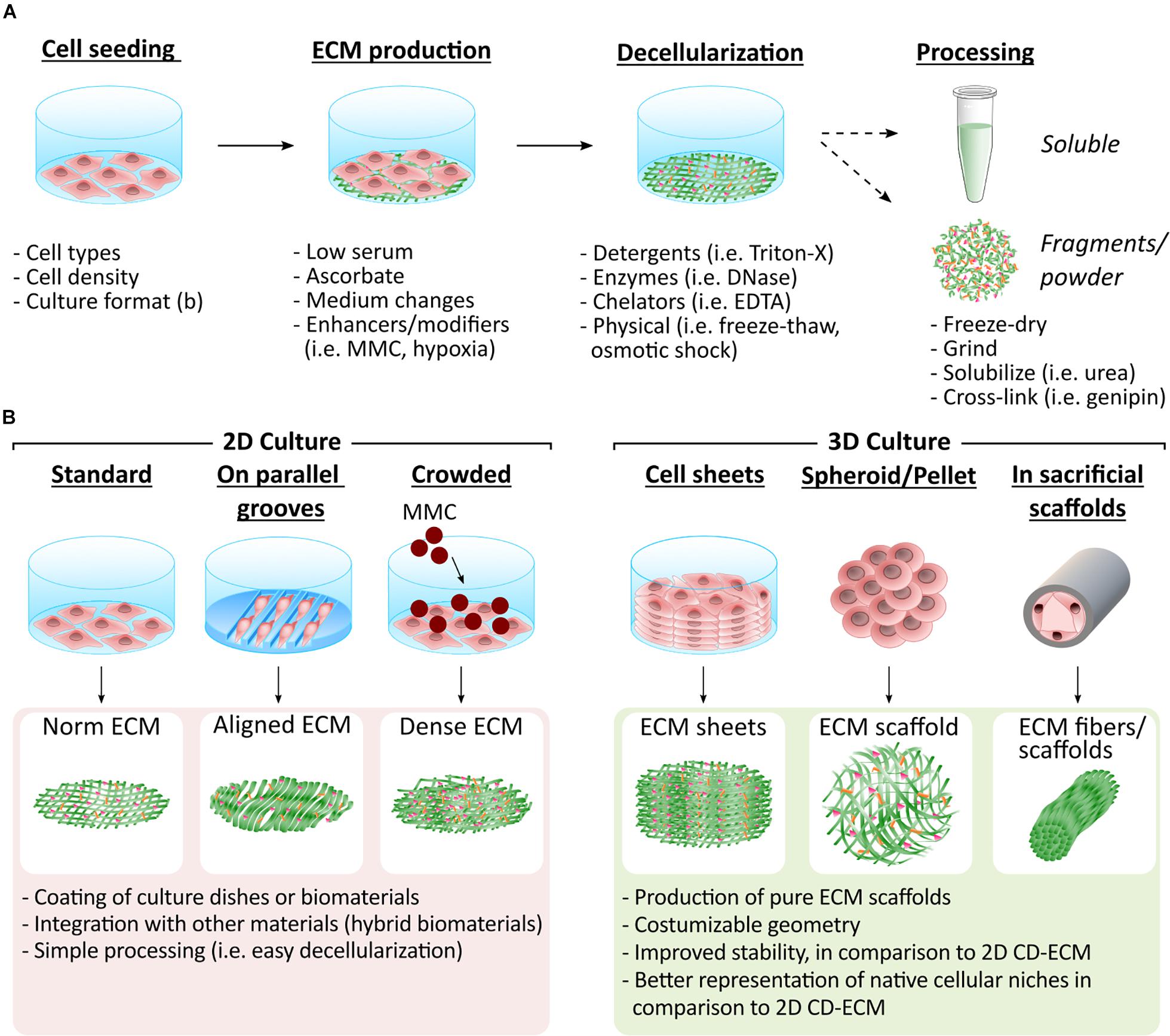
Decellularization is a scientific procedure that involves removing entire living cells from tissues or organs while maintaining an intact ECM structure. Cells contain identifiers that trigger immune rejection, but extracellular matrix (ECM) components such as collagen, elastin fibers, and laminin are conserved across species and generally do not cause rejection.
They are not particularly immunogenic. Scientists may have to use detergent, enzymatic solutions, physical lapping or even a special perfusion system to gently strip out all the cellular material but allow one to maintain the tissue framework. The result is that decellularization of the ECM makes it a biologically compatible platform that can be repopulated by the patient's own cells, greatly reducing the risk for rejection.
Why ECM Matters in Regenerative Medicine
The extracellular matrix is much more than a structural framework. It regulates cell behavior, guides tissue repair, communicates biochemical signals, and provides mechanical support. Further studies show that the extra cellular matrix (ECM) serves as a dynamic biological framework that orchestrates cellular behavior through biomechanical and biochemical cues, playing a pivotal role in tissue homeostasis and repair.
Unlike synthetic biomaterials, ECM retains nature’s complexity, micro channels, biochemical gradients, architecture, and stiffness tailored to each organ’s function. Decellularized ECM harnesses these natural designs, giving scientists an advantage that artificial materials cannot match. This biological authenticity allows engineered tissues to behave more like native tissues, supporting cell growth, differentiation, and long-term survival.
Decellularized Heart
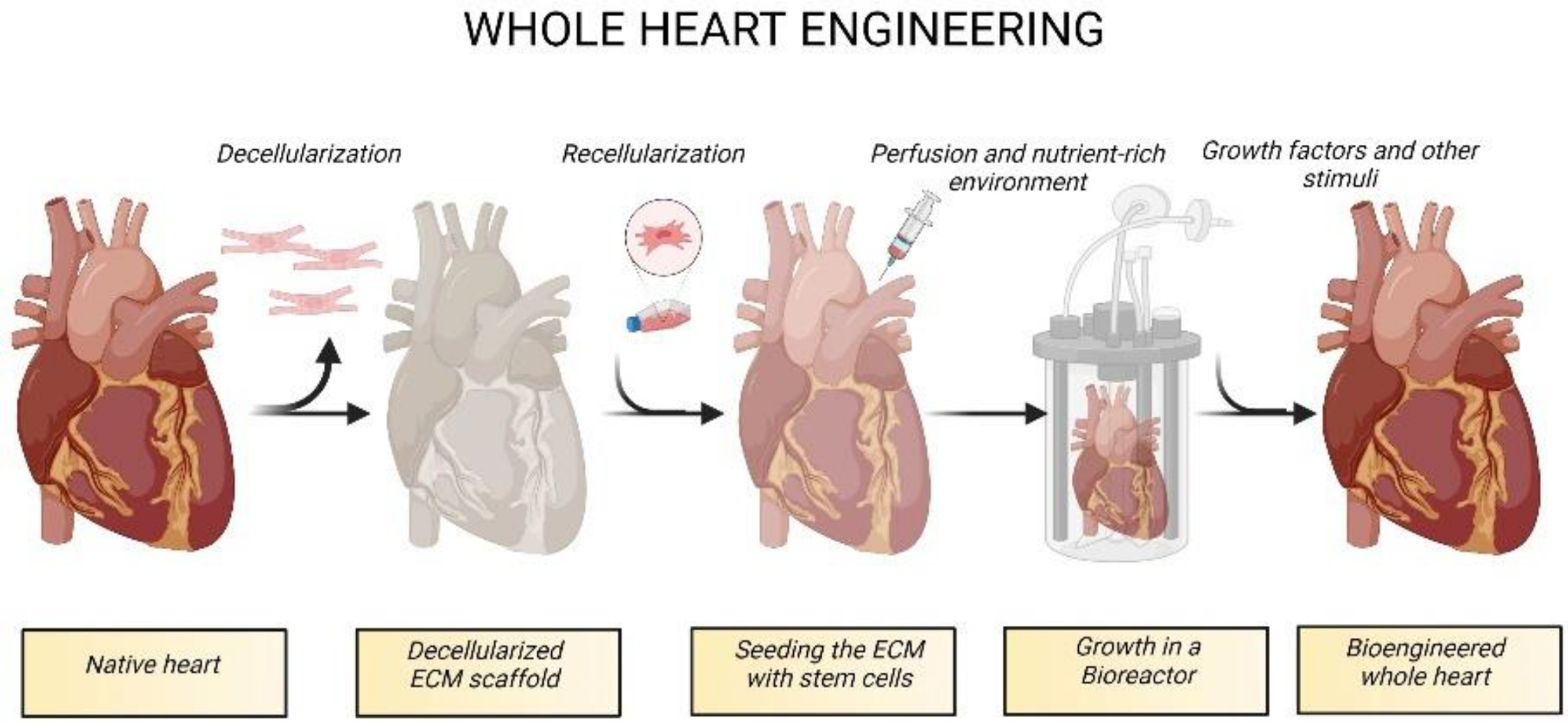
Among the most remarkable achievements in the field of decellularization research is the development of a decellularized heart model. Using perfusion-based decellularization, scientists pump gentle detergents through the coronary vessels until all cardiac cells are removed. This results in a pale white, translucent scaffold consisting entirely of ECM. The beauty of this scaffold is that not only does it reflect the anatomy of the heart chamber with its compartments and valves, but also serves as a substrate for the growth of new tissue.
When repopulated with human muscle stem cells or induced pluripotent stem cells derived from adult tissues (iPSCs), thescaffold guides those cells to become cardiac tissue, arranging themselves in proper alignment. Researchers have successfully produced hearts beating away in the lab, which not only contract, but respond to electric shocks at will andcan pump liquid between their chambers. This remarkable success offers a glimpse into future approaches for replacing hearts in patients.
How Scientists Recellularize Decellularized ECM
This procedure involves injecting a cell population able to regenerate functional tissue or perfusing the decellularized ECM with them. Often, autologous stem cells derived from the patient are used to ensure complete biocompatibility. The cells attach themselves to the ECM, sense its biochemical messages and begin reorganizing. In the case of cardiac tissue, bioreactors provide oxygen, nutrients and mechanical stimulation.
They even administer electric pulses to start the heart muscle cells beating again. These controlled environments bring cells to maturity and take them up on thescaffold. Over time, natural ECM architecture with biological conditioning can lead to tissues that duplicate the functionality of real organs.
Applications of Decellularized ECM in Medicine
Decellularized extracellular matrix (ECM)–based constructs are increasingly applied across a wide range of medical fields. Tissues such as dermal grafts, bone scaffolds, nerve guides, and vascular conduits are already used clinically to repair injuries and restore function.
Decellularized organ scaffolds are important for disease modeling and drug screening since they mimic the microenvironments of real organs. What's more, they contain rich possibilities for whole-organ engineering, with decellularized hearts, lungs, kidneys and livers all being under intensive study. The versatility and authenticity of these structures based on the ECM make them a cornerstone of the advances in regenerative medicine.
Bioengineered Cardiac Scaffolds as a Solution to Organ Shortages
The decellularized heart, becomes not only a demonstration for the state of the engineering art, but also a solution to one of medicine's most pressing problems, organshortages. Thus, each year, the waiting list for donor hearts grows longer and many thousands of patients die. Decellularized heart scaffolds can help meet the need for customizable organs. New technologies in biomedicine are becoming acritical turning point. And because they have only infrequent problems or interventions, such replacements would reduce the number of external points of failure.
In this respect, if nothing else, they offer an improvement over humankind’s current position on donor hearts. This can be shown by the example of bone tissue or blood vessels, which are usually not replaced. For reconstructing a truly complete and perfect heart organ, decellularized heart scaffolds are just such a viable option, in addition to anything else. They also enable researchers to study inherited heart disorders, the development of heart muscle disease, and how hearts react to drugs in more authentic biological settings. Patient-specific heart models allow physicians to foresee the results of treatment and plan their operations.
Advantages of Decellularized ECM Over Synthetic Materials
Unlike purely synthetic materials, decellularized ECM has many benefits. It retains all native biochemical cues as well and so can recover growth factors, adhesion ligands and many complex glycoproteins. This, in turn, promotes better cell adhesion, proliferation, and differentiation. These contribute greatly to guiding cell migration, proliferation and differentiation.
Some studies also support this, showing that Decellularizedextracellular matrix (dECM)-based scaffolds have gained attention due to their unique biomimetic properties, providing a specific microenvironment suitable for promoting cell proliferation, migration, attachment, and regulating differentiation. For promoting the reconstruction of damaged tissues or organs, different types of dECM-based composite platforms have been designed to mimic the tissue microenvironment, including by integrating with natural polymer and synthetic polymer or adding bioactive factors.
Decellularized tissues tend to trigger a lower immune response, integrate more easily with host tissues, and support long-term function. This last benefit, supporting the body’s natural repair processes, is what makes decellularized tissues ideal for reconstructive surgery, engineered organs, and personalized medicine.
Unlocking the Potential of Decellularized ECM in Regenerative Medicine:
Decellularized ECM technology holds immense promise for regenerative medicine, and ongoing innovations are steadily overcoming previous hurdles. Optimizing decellularization methods ensures the removal of cellular material while preserving the delicate ECM structure. The viability of engineered organs is being improved as a result of advancements IN bioreactor design that enable more uniform recellularization, even in dense tissues.
Strategies for vascularization are increasingly successful, supporting organ survival post-transplantation. Efforts are also underway to scale up ECM production, making it more feasible for clinical applications. With continued research, ethical, logistical, and cost challenges are being addressed, bringing the vision of functional ,lab-grown organs closer to reality.
Future Directions in Heart Reconstruction Technology
The decellularized heart is one of the invaluable rewards of future medicine: it functions perfectly, yet is composed almost entirely from the body's own original materials. In research labs, recellularized hearts are already showing rhythmic contractions.
Full-blown transplantable organs are the next goal of scientists working on this. However far from reality clinical use may be, what has been achieved here serves as are minder of how even nature can be made to leapfrog its own past barriers in a manner unique to living things. With further progress, the decellularized heart reveals how regenerative medicine is not just curing diseases anymore. It's changing how bodies are reassembled.
The Future of Decellularized ECM Technology
Although each approach has its advantages, it’s generally agreed that the decellularized program has a rosy future. Researchers are hot on its trail, using gene editing,3D bioreactor systems and stem cell biology to produce organs completely functional in situ. This study also supports this, the dECM solution could be transformed into a hydrogel at an appropriate temperature with three-dimensional (3D) network structures, providing a unique and effective microenvironment for the developing cells and surrounding tissue.
If decellularized scaffolds are personalized for a patient's own cells, then rejection risks will be eliminated from organ transplants. Pushing the use of decellularized ECM beyond organs it’s being inserted into devices such as bioactive wound dressings and injectable matrices, regenerative patches which can remedy defective tissues back to functioning once again. Over time, as technology improves every step of the way, Decellularized ECM will change the face of medicine over time. It invites medical scientists to take their ideas from above and try them out in practice.
Frequently AskedQuestions:
1. What Is the Role ofECM in Regenerative Medicine?
Cell growth, healing, and tissue regeneration are all guided by the structural support ,biochemical signals and natural environment that ECM provides.
2. What Are the Therapeutic Uses of ECM?
Wound healing, Tissue repair, Organ scaffolds, Skin grafts, Cardiovascular patches, Regenerative implants
3. How Are Stem Cells Used as Model Cells in Medical Research?
They help researchers study disease mechanisms. They help researchers test drugs. And they help researchers to make tissue models.
4 .What Are the 4 Types of Regenerative Medicine?
● Tissue engineering
● Stem cell therapy
● Biomaterials and scaffolds
● Gene therapy
5. Which Fruit Regrows Stem Cells?
Blueberries have long been noted for enhancing stem cell activity with their high antioxidant and polyphenol content.
Conclusion
The decellularized extracellular matrix is a significant milestone in the development of regenerative medicine. This high-quality natural framework can be restored and reused, turning it into a powerful tool for repairing tissues or organs damaged by injury. As we move from today’s use of decellularized tissues in surgical repairs toward a near future where entire organs, such as hearts and even livers, can be rebuilt, this technology is steadily evolving into something even more transformative.
By retaining the natural structural and biochemical architecture, decellularized extracellular matrix presents an unparalleled foundation for tissue regeneration, disease modeling and custom treatments. With the progress of research, these natural scaffolds may come to be at the core of solving worldwide organ shortages and fundamentally changing medical care itself.


More from KessGen Insights.

.webp)


.webp)
To unlock the full power of the ECM and pioneer a new era of regeneration.


.webp)
.png)
.webp)

.png)