
The Role of ECM in Medical Cell Signaling and Regeneration
Discover how the extracellular matrix (ECM) in medical controls cell signaling and tissue regeneration, revolutionizing medical interventions and regenerative treatments.

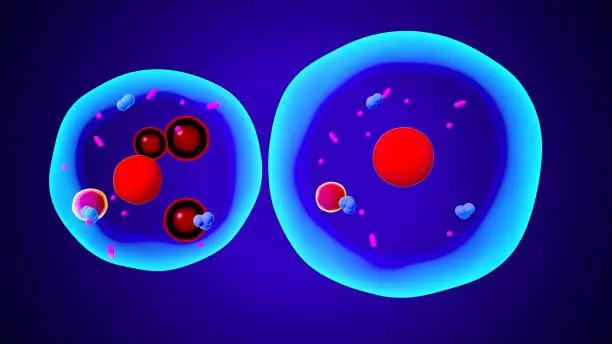
The extracellular matrix (ECM) is a complex network of proteins and polysaccharides that envelopes cells, providing them with an environment in every tissue. Its function goes beyond mechanical support: It serves as a dynamic communication network that tells cells how to behave, grow and repair tissues.
In modern regenerative medicine, researchers are discovering how this complex network plays a role in cell signaling, tissue regeneration and healing. The ECM is commonly involved in the translation of extracellular cues to biological responses and becomes an important target in the development of novel biomaterials as well as advanced cell therapies.
Understanding ECM in Medical Applications
The ECM in medicine has become a central area of modern biotechnology due to the critical importance of separating cells and in tissue architecture. Not only does it provide structural support system but also a signalling store to control extensive biological events.
Predominantly constituted by collagen, elastin, laminin, fibronectin and glycosaminoglycans (GAG) networks, the ECM plays an essential role in providing a scaffold for tissue integrity and elasticity and in embryonic life. These macromolecules exert their effects on cells through specific receptors, which affect cell adhesion, migration and differentiation.
Further studies show the matrix is composed of extracellular collagens, glycoproteins, glycosaminoglycans, proteoglycans, adhesion molecules, growth factors, chemokines and cytokines. Each of these components have important functions during embryonic development. Cell-ECM interactions are necessary for many developmental processes such as cell migration, branching morphogenesis, and cell fate specification.
Within the context of medical research, there is an emerging interest in investigating the ECM due to its capacity to:
- Regulate cell migration to aid in tissue defective repair.
- Store and release growth factors.
- Regulate stem cell differentiation.
- Stimulate angiogenesis, the growth of new blood vessels.
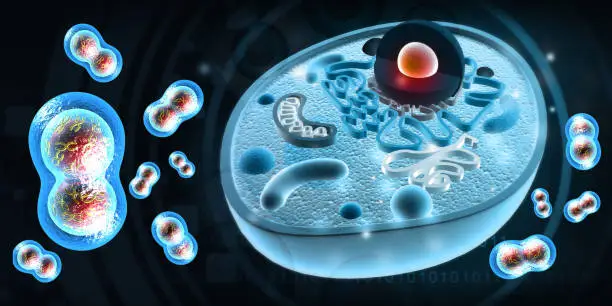
Composition and Structure of the Extracellular Matrix
The ECM is a highly structured network, composed of two basic elements: fibrous proteins and ground substance.
1.Fibrous Proteins:
- Collagen: For tensile strength and form.
- Elastin: Provides tissues the ability to stretch and recoil.
- Fibronectin and Laminin: Mediate the adhesion and migration of cells.
2.Ground Substance:
- A gel-like pouch in the cartilage matrix, containing proteoglycans and GAGs (including hyaluronic acid) which allows for the diffusion of nutrients and waste particles.
- It controls tissue hydration and acts as a mechanical cushion to the tissues, thus ensuring their flexibility and resistance against compression.
The Role of ECM in Medical Cell Signaling
Among the ECM’s distinctive characteristics in medical science is its role in cell signaling the mechanism by which cells communicate about how they should respond to their environment.
Integrin Mediated Communication
Integrins, specialized receptors that relay mechanical and chemical signals, are what cells use to adhere to ECM proteins. Secondly, once activated these receptors initiate intracellular chains of events that control:
- Cell division and survival
- Gene expression
- Differentiation and migration
This process is what allows tissues to stay in balance and respond properly to injury or stress. These words are supported by this study,
Growth Factor Reservoir
The ECM functions as a storage site for growth factors, such as VEGF, FGF and TGF-β. While the ECM is being remodeled, such molecules are disengaged in order to promote activities including angiogenesis and tissue regeneration.
These words are supported by this study, Key components like fibronectin and collagen engage integrin receptors, activating FAK/ERK pathways to drive migration while sequestered growth factors (e.g., TGF-β, PDGF) are released to modulate proliferation. This synchronized regulation of adhesion, motility, and cell cycle progression creates an optimized microenvironment for regeneration. The ECM orchestrates the release of these molecules so cell regenerative processes can be well-coordinated.
Mechanotransduction
Cells detect and react to mechanical forces (mechanotransduction) with the ECM rigidity and tension modulating cell activities. For instance, bone cells function better in a hard ECM, whereas neuronal cells excel under softness. The ability to convert mechanical signals into biological behaviors is essential for the design of ECM derived biomaterials.
ECM Remodeling in Tissue Repair
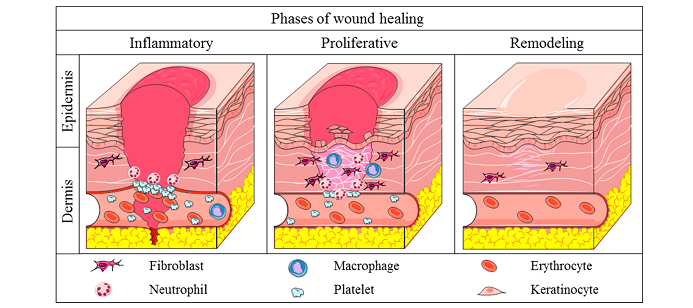
The ECM is continuously being remodelled, a crucial aspect of wound healing and the maintenance of tissues. The ECM is broken down and newly synthesized in several stages after tissue injury:
1. Inflammatory Phase:
Broken ECMs pieces are signals attracting immune cells to remove the wound.
2. Proliferative Phase:
The newly generated ECM proteins are produced by fibroblasts and other cells, creating a provisional matrix for tissue repair.
3. Remodeling Phase:
The provisional ECM is remodeled to be replaced by mature, functional matrix components and the normal architecture of the tissue is re-established.
An altered ECM remodeling may result in fibrosis or impaired wound healing. Consequently, knowledge of this process is essential for identifying and developing treatments that facilitate an efficient healing response
Interaction Between ECM and Stem Cells
Stem cells are the basis of regenerative medicine, and their fate is greatly encouraged by the ECM. To decide whether to stay quiescent, to proliferate or differentiate into a specific cell type, such as specialized cells, stem cells integrate the chemical and mechanical information communicated by the ECM.
For example:
- Soft ECMs promote neuronal differentiation.
- Modestly stiff ECMs promote muscle growth.
- Rigid ECMs favor bone formation.
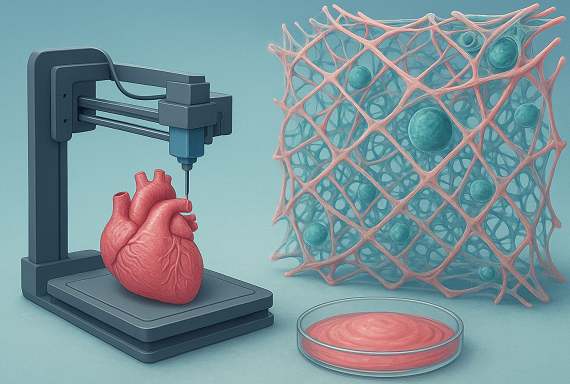
This understanding is used to generate organ and tissue specific ECM derived scaffolds to drive stem cell growth and differentiation. Such decellularized ECM derived from organs like the heart or liver is currently being employed as a biological platform for the creation of new tissues in vitro.
ECM Based Biomaterials in Regenerative Medicine
Biomaterials for regenerative medicine, produced from ECM, are a significant development. These materials emulate the biochemical and physical characteristics of native ECM, which enables their use for cell attachment and integration.
Examples include:
- Collagen hydrogel for wound healing and soft tissue repair.
- Decellularized scaffolds for organ repopulation.
- ECM-based bioinks for 3D bioprinting of tissue.
These biomaterials enhance biocompatibility, biodegradation, and cellular signaling for accelerated as well efficient healing results. Since they can promote the body's own tissue healing, they are more advantageous than synthetic implants in several medical applications.
Emerging Applications of ECM in Medical Regeneration
Recent progress has developed more applications of ECM in medical regeneration for the different therapeutic areas:
- Re-Generate Organs: Decellularized ECM scaffolds are being used to re-generate organs , heart/liver/kidney etc, possibly solving the organ donor crisis that exists in many developed nations across the world.
- Cancer Therapy: Knowledge of ECM remodelling can be used to design drugs that block tumor invasion and metastasis.
- Wound Healing: ECM dressings are used in chronic wounds, where they provide growth factors for the promotion of closure and minimize scar formation.
- Neuro-Repair: ECM mimetic hydrogels have also been studied to repair damaged nerve tissue.
The future of tissue engineering and regenerative medicine will be revolutionary.
Challenges and Future Perspectives
The applications of ECM-based technologies can be tremendous; however, there are many challenges:
- Immune response: Naturally derived ECMs, particularly those from animal sources, can cause inflammation or be rejected.
- Scalability: Preparing the ECM scaffolds in a standardised manner at large scale are still challenging.
- Replication: Although it is hard to completely mimic the native ECM environment because of its molecular complexity.
To avoid these challenges, researchers are devising artificial ECM mimics with the aid of nanoscience, bioengineering and computer-aided design. Such synthetic matrices are designed to induce the same biological stimuli as natural ECM, but with greater control, safety and reproducibility.
Frequently Asked Question:
Does the Extracellular Matrix Play a Role in Cell Signaling?
Yes, the extracellular matrix (ECM) in medicine governs cell behavior by transmitting biochemical and mechanical signals to determine cell growth, differentiation, and migration.
What Is the Function of the ECM in a Cell?
The ECM not only serves a structural role but also maintains cells, modulates cellular signaling, cell survival and differentiation.
What Are the 4 Types of Regenerative Medicine?
There are four therapeutic applications of MSCs, including
- cell therapy,
- tissue engineering/gene therapy
- material biology.
What Are the Functions of an ECM?
It offers the structural support, regulates cell adhesion and migration, stores growth factors and assists in tissue regeneration.
What Is the Regenerative Function of the Extracellular Matrix?
The ECM induces tissue healing by stimulating cells attachment and proliferation and differentiation towards repair of the damaged tissues.
Conclusion
The extracellular matrix is much more than a scaffold, it is a living organ-like structure with biological activity that can regulate signaling and crosstalk between cells, as well as to help tissue to regenerate. The comprehensive knowledge of the ECM in medicine that can be gained by studying its complexities in medical science will result in next generation therapies that are able to heal tissues and return organs back to function.


More from KessGen Insights.
.webp)


.webp)
To unlock the full power of the ECM and pioneer a new era of regeneration.


.webp)
.png)
.webp)

.png)