
How ECM Scaffolds and Biomaterials for Wound Healing Accelerate Tissue Repair
Explore how ECM scaffolds and biomaterials accelerate wound healing by enhancing cell growth, tissue repair, and regeneration processes.

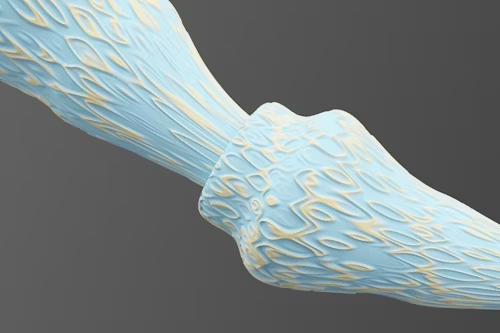
Wound healing is a complex biologic process associated with cellular communication, ECM remodeling and regeneration of tissues. In the last several years, biomaterials for wound healing have been introduced as a new strategy to accelerate tissue regeneration.
These materials, especially the ones that replicate natural ECM, offer a favorable microenvironment for cell adhesion and migration, proliferation and differentiation. The integration of recent progress in biomaterials science and tissue engineering has resulted in ECM scaffolds that not only promote wound closure more rapidly, but they also can regenerate functional tissue with limited scarring.
The Biology of Wound Healing
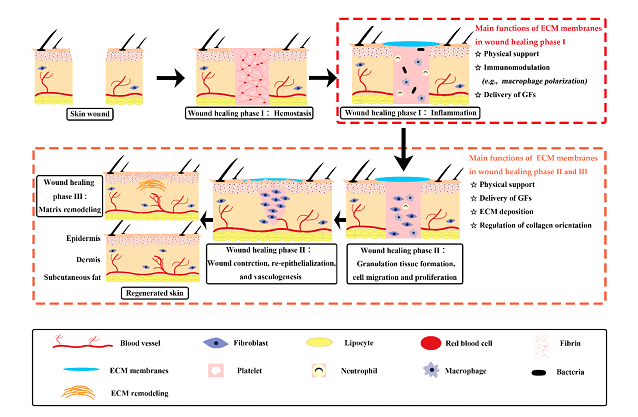
Wound healing is a complex process that consists of four distinct and overlapping stages: hemostasis, inflammation, proliferation, and remodeling. During these stages, the ECM plays a vital role in providing structural support and biochemical signals for cells.
- Hemostasis Phase: When there's injury to tissue, blood clotting stops the bleeding and platelets release growth factors that start the healing process.
- Inflammation Phase: Immune cells kill pathogens and debris, but they also release cytokines to stimulate tissue repair.
- Proliferation Phase: Migrating fibroblasts and keratinocytes deposit new ECM components, including collagen and elastin, into the wound bed.
- Remodeling Phase: Newly synthesized tissue matures and ECM components are rearranged for restoration of the skin integrity.
This process is often disturbed in chronic wounds as a result of impaired vascularization or inflammation. In this context, biomaterials for wound healing could supply the lacking structural and biochemical stimuli to re-initiate and direct tissue regeneration correctly.
Understanding the Extracellular Matrix (ECM)
The extracellular matrix is a three-dimensional protein and polysaccharide network released by cells. It provides tissue support and controls behavior of cells by biochemical signaling. The ECM is composed of:
- Supporting Proteins: Collagen, elastin and fibronectin give the skin strength and elasticity.
- Proteoglycans and GAGs: These molecules hold water, and facilitate the movement of nutrients.
- Adhesive Glycoproteins: Lamin and integrins allow cells to stick together and move.
A study published on 27th October 2021 also shows, After decellularization, extracellular matrix (ECM) scaffolds obtained from different types of body membranes retain a variety of bioactive substances such as the growth factors, collagen, laminin, fibronectin, and polysaccharide. Notably, they possess ultrastructural features similar to those of the natural tissues
The ECM is being constantly degraded and produced as part of wound healing. This turn-over is necessary to allow new tissue formation. But in other cases, such as diabetic ulcers or third-degree burns, the ECM is so extensively damaged that it can’t regenerate itself. Here is where the engineered ECM scaffolds and biomaterials appear.
ECM Scaffolds: The Foundation of Regenerative Healing
ECM derived scaffolds are intended to mimic the structural and biochemical characteristics of the native matrix. These scaffolds serve as temporary structures for cells to adhere, reproduce, and develop new tissue.
Key Characteristics of Effective ECM Scaffolds:
- Biocompatible: They should be able to bind without provoking immune responses.
- Biodegradability: Degrading of the scaffold at a rate consistent with the formation of new tissue.
- Porosity: Enough pore size and interconnectivity to allow nutrient diffusion and cell penetration.
- Mechanical strength: The scaffold should provide the same mechanical support as the replaced tissue.
Natural ECM-Derived Scaffolds
These are usually sourced from decellularized tissues (porcine dermis or small intestinal submucosa), in which the cells have been removed but ECM biochemical properties retained. These scaffolds are abundant with collagen and growth factors, which promote healing.
Synthetic and Hybrid Scaffolds
Artificial polymers, including polycaprolactone (PCL), polylactic acid (PLA), and polyethylene glycol (PEG) can serve as materials for scaffold fabrication with adaptable features. Hybrid scaffolds incorporate both natural and synthetic materials to combine the strengths of both, that is, mechanical strength and biological activity.
Biomaterials for Wound Healing: Types and Applications
Biomaterials are materials designed to be used in contact with a biological system for treatment. During the process of wound repair, biomaterials can load cells, growth factors or drugs and create a controlled microenvironment to enhance tissue regeneration.
1. Natural Biomaterials
These include natural polymers such as collagen, chitosan, gelatin, hyaluronic acid and silk fibroin due to their intrinsic biocompatibility and bioactivity.
- Collagen: Encourages fibroblast adhesion and new collagen formation.
- Chitosan: Has antimicrobial effects and promotes hemostasis.
- Hyaluronic acid: Promotes cell migration and angiogenesis.
2. Synthetic Biomaterials
They are designed for certain mechanical and biodegradation characteristics. Examples of others include PCL, PLGA and PEG.
Benefit: Modifiable degradation and simple modification.
Limitation: Often lack natural bioactivity.
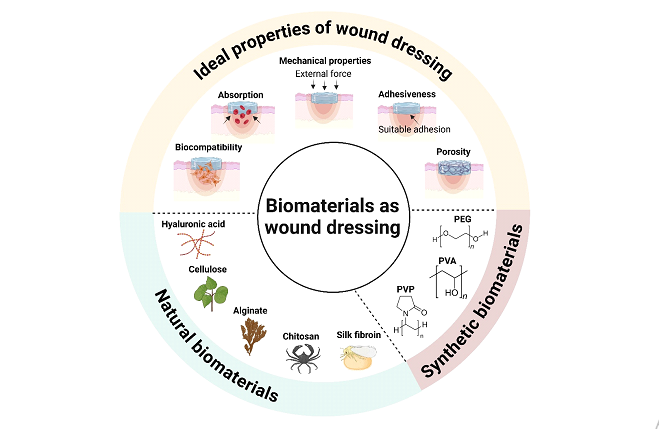
3. Composite Biomaterials
The combination of natural and synthetic materials results in scaffolds with enhanced properties. For example, collagen-PCL composites possess both biocompatibility and strength, suitable, long-lasting material for chronic wounds.
Mechanisms by Which Biomaterials Accelerate Tissue Repair
The aim for wound healing biomaterials is to replicate the natural environment of injured tissue. They have multiple modes of action for healing:
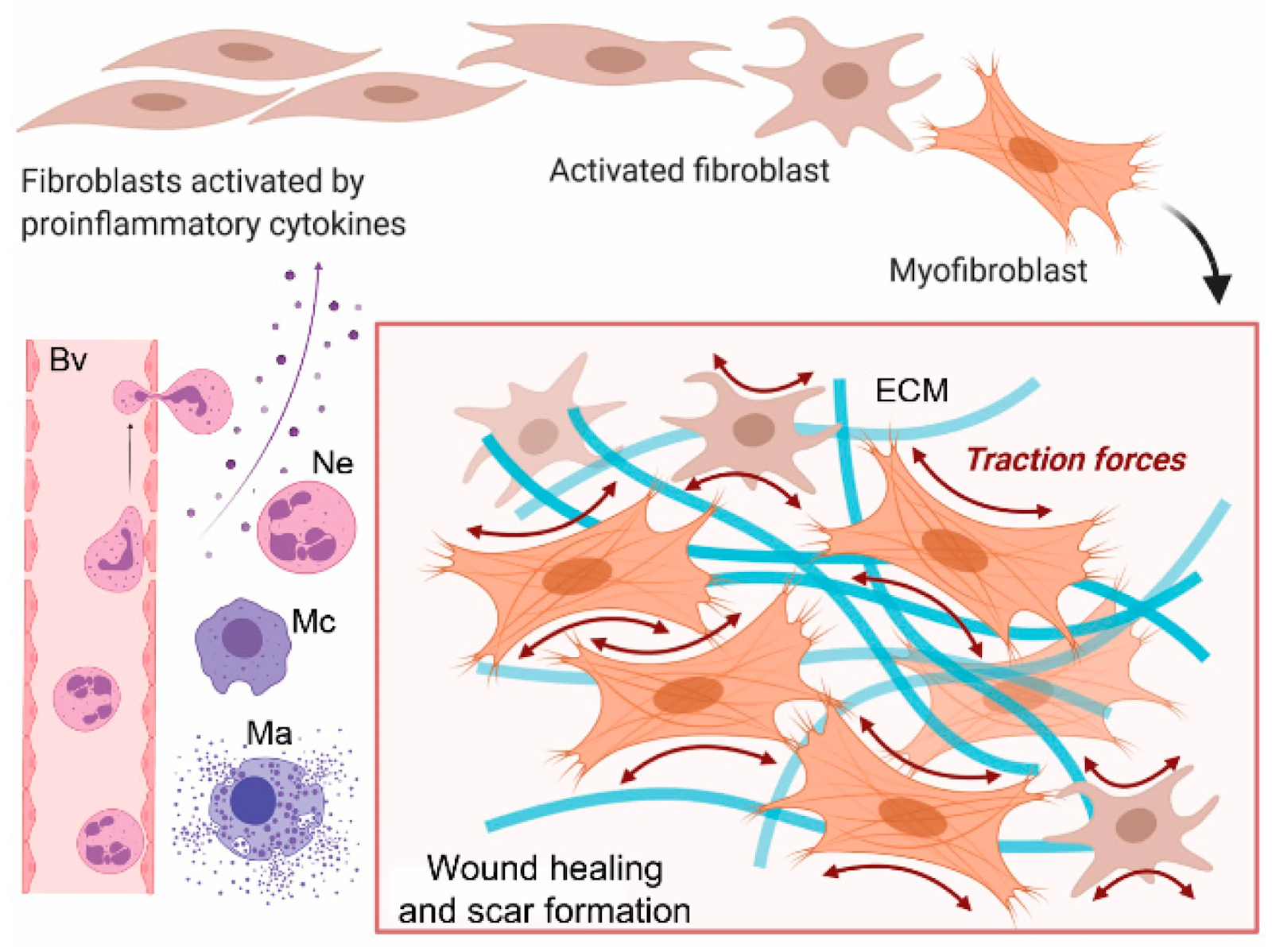
- Cell Recruitment and Proliferation: Scaffolds recruit progenitor cells and fibroblasts to promote tissue formation.
- Angiogenesis: Modulations in the expression of cytokines/growth factors such as VEGF will lead to improved angiogenesis.
- Controlled Inflammation: Devices made of biomaterials can modulate the inflammatory response to avoid chronic wounds.
- Delivery of Growth Factor: They act as a controlled-release vehicle for growth factors, including PDGF, TGF-β and EGF.
- Mechanical Barrier: Scaffolds offer a physical defense against bacterial ingress and dehydration.
These attributes makes ECM scaffolds and biomaterials an invaluable tool in the field of tissue healing. Further studies also support this,‘’ ECM biology and its biomaterial applications, analyzing: (i) structure-function relationships governing cell fate; (ii) molecular signaling mechanisms; (iii) comparative advantages of biomaterial classes, and (iv) strategies to overcome immunological, manufacturing, and regulatory barriers.’’
Clinical Applications of ECM Scaffolds and Biomaterials
1. Chronic Wounds
ECM-based dressings have shown great potential for application in chronic wounds, including DFUs and VLUs. Scaffolds rich in collagen have been demonstrated to enhance granulation tissue growth and accelerate healing.
2. Burn Wounds
Biomaterial dermal substitutes or scaffolds act as a temporary matrix for epithelialisation and scarring.
3. Surgical and Traumatic Wounds
Reconstructive surgeries are potentially facilitated by ECM scaffolds to regenerate the skin, muscle or tendon tissues. They are known to facilitate better integration and overall long-term organ/tissue functioning.
4. Bioengineered Skin Substitutes
By combining biomaterials with stem cells or growth factors, bioactive skin equals can be generated with dermal as well epidermal regeneration.
Advantages of Using ECM Scaffolds and Biomaterials
- Improved Healing Speed: Stimulate closure of the tissue increments more rapidly than regular dressings.
- Scars are Smaller: Guide and direct collagen formation.
- Biological Signaling: Assist in cellular signalling necessary for regeneration.
- Modification: Can be customized to individual wound types.
- Long Acting Drug Carrier: Enable the inclusion of antibiotics or anti-inflammatory drugs.
Challenges and Future Perspectives
Despite significant advances, challenges remain:
- Immune Compatibility: Some biomaterials can cause an immune reaction.
- Mechanical Limitations: Soft scaffolds may not possess sufficient strength for the load-carrying tissues.
- Cost and Scalability: Expensive for production and sterilization.
Further studies are moving towards the smart biomaterials for wounds that respond to the environment of wound, the 3D bio-printing ECM scaffolds, and nanomaterial-based dressings with real-time monitoring and drug-releasing behaviour. The incorporation of AI-driven design may also facilitate the realization of patient-specific biomaterial scaffolds tailored for specific wound types.
Frequently Asked Questions
1. What Is the Role of the Extracellular Matrix (ECM) in Wound Healing?
ECM can offer scaffold support, regulate cell function and promote the migration and proliferation of cells for tissue repair.
2. What is the Role of Biomaterials-Based Scaffolds in Advancing Skin Tissue constructs?
They replicate the natural ECM, allowing skin cells to regenerate and develop into new tissue layers.
3. How Are Biomaterials Used in Wound Healing?
Biomaterials play the roles of scaffolds, the carriers for growth factors and protective barriers to support tissue regeneration and resist infection.
4. What Is the Purpose of Using Scaffolds in Tissue Engineering?
Scaffolds offer a 3D framework that supports cell growth, nutrient transport, and tissue development until natural tissue replaces it.
5. What Is the Purpose of Using Scaffolds in Tissue Engineering?
They induce cellular activity, angiogenesis, and deposition of ECM, by which tissue is formed in an organized manner and the wound is closed faster.
Conclusion
This fusion of ECM scaffolds and biomaterials for wound healing is a revolutionary concept in the field of regenerative medicine. These materials not only contribute to building up the damaged tissues structurally, but also help regulate most biological actions needed for real regeneration. These biomaterial-based scaffolds can promote faster healing, prevent scarring, and yield better patient outcomes by simulating the body’s own regenerative pathways.
As research goes on, a new generation of biomaterials featuring bioactive molecules, intelligent sensors and stem cell integration technology is being prepared. In this way, it will change the way we approach chronic wounds and tissue repair.


More from KessGen Insights.
.webp)


.webp)
To unlock the full power of the ECM and pioneer a new era of regeneration.


.webp)
.png)
.webp)

.png)