
From Lab to Clinic: How ECM Research Is Transforming Regenerative Therapies
Learn how ECM is driving regeneration therapies by transforming lab advancements into clinical care, delivering safer, more effective healing.

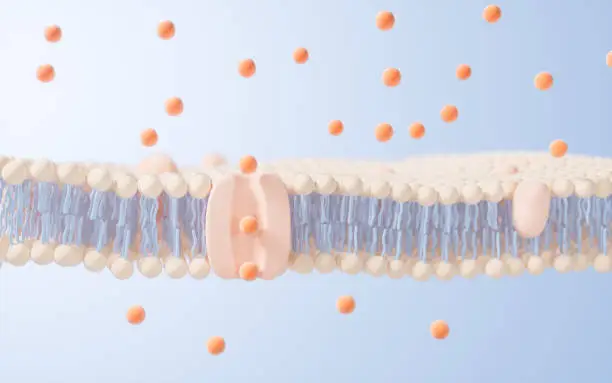
The realm of regenerative therapies is revolutionizing modern medicine, with the extracellular matrix (ECM) playing a major role in this transformation. The ECM, which was traditionally considered a structural support, is now emerging as an initiator for the various therapeutic strategies of regenerative medicine.
With the development of science and technology, it is possible for scientists to treat injured tissues or organs with more accurate and biorelevant replacement, repair and regeneration. Therefore, regenerative treatments are transitioning from simplistic and remarkable lab discoveries into mainstream clinical use. The ECM provides a Unique Functional Bridge, A flexible tool that allows the association of disruptive science with clinical utility in hospitals and clinics.
The millions of organ and tissue failures, chronic wounds, cardiovascular patients and sufferers from degenerative diseases all would be helped by regenerative therapies based on ECM science. Unlike synthetic alternatives, regenerative therapies based on the ECM present natural biochemical signals that guide cellular responses, facilitate healing and restore performance. This potential has defined ECM research as a cornerstone in regenerative medicine worldwide.
The Rise of ECM in Regenerative Therapies
A complicated network of proteins, glycoproteins, proteoglycans and other molecules that wraps itself effortlessly around cells all over our body, they are known as the ECM. However, cell-matrix relations are not static but interactive. It is the substance that tells cells how to grow, how to move, which way to differentiate and even how they can heal after an injury. These are the kinds of orders modern regenerative therapies must learn to obey if they are ever to work.
Decellularized ECM, where all cells are removed but the structure is preserved, has become a major element in regenerative therapies.Further studies also support this,“Decellularized extracellular matrix (dECM)-based scaffolds have gained attention due to their unique biomimetic properties, providing a specific microenvironment suitable for promoting cell proliferation, migration, attachment and regulating differentiation.”
Heart valves, skin grafts, cartilage patches, vascular grafts, and organ scaffolds are now routinely formed using decellularized ECM. Within the next few years, ECM-driven regenerative therapy is projected to branch into areas such as lung repair, neural reconstruction, and individualized organ engineering.
ECM as the Blueprint for Next-Generation Regenerative Therapies
Consequently, the ECM does not just support tissues, but it actually governs the process of healing. By acting as a kind of chemical GPS, it guides how cells behave at every stage of tissue development. So when ECM is included in regenerative therapies, the outcome improves dramatically.
1. ECM Guides Cell Communication
Cells depend on signals from the ECM to relay when they should divide, migrate or specialize. Reintroducing such signals could potentially be facilitated by employing materials that utilize natural signaling pathways of the body to support injured tissues.
2 . ECM Controls Mechanical Strength
Different tissues require different degrees of elasticity and resistance to strain. In fact, with ECM-based regenerative therapies, these mechanical properties of living material are not altered so that the tissue-engineered tissue is able to keep its own functionality.
3 . ECM Supports Immune Modulation
Molecules involved in moderating inflammatory reactions are also present in the ECM. This makes it ideal for regenerative therapies, avoiding rejection and promoting natural healing.
4. ECM Enhances Vascularization
One of the big obstacles in regenerative therapies is providing blood flow. The ECM is pro-angiogenic (by its nature, it binds with host cells to suppress immune response and stimulates the creation of blood vessels), promoting the growth of blood vessels that modify the tissue-engineered structure.
These benefits are one of the most valuable assets for moving regenerative therapies out of the labs into viable clinical treatments.
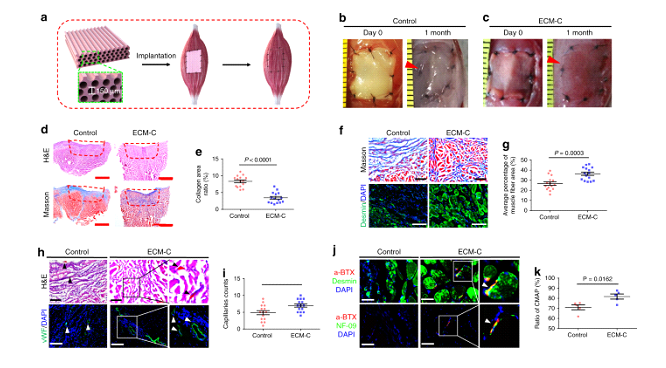
Breakthroughs Taking ECM Research From Lab to Clinic
Researchers have used ECM entirely derived from donor organs to create naturally shaped, lab-grown organ scaffolds. These natural scaffolds retain the structure of the organ, allowing stem cells to populate them and restore functional tissues. This method shows remarkable promise in regenerative therapies for heart repair, liver regeneration, kidney restoration, and lung reconstruction.
1. Organ Scaffolds:
This ECM-derived technique for organ reconstruction can make tissues robust and long-lasting in their function, as nature does today. It protects against acute injury, offers a source of new living tissue, and allows faster healing and recovery from disease. Not only that, it is also one of the most powerful techniques when applied to whole organs.
A study published on 29 May 2018 shows that decellularized ECM scaffolds can also serve as templates for whole organ engineering. Specifically, the development of perfusion decellularization methods and the subsequent recellularization with stem and progenitor cells have opened new possibilities for the replacement of damaged or diseased organs
2. Wound Healing and Skin Regeneration
ECM-derived hydrogels and scaffolds are now a vital part of therapies aimed at the regeneration of burns, chronic wounds and diabetic ulcers. They hasten the regrowth of tissue, minimize scarring.
3. Cardiac Tissue Repair
After a heart attack, injured heart tissue seeks to repair itself, but due to the lack of cardiomyocytes that can regenerate, this is impossible. Cell-free regenerative therapies using ECM are applied for the regeneration of damaged cardiac tissue. They provide structural support, and they give off biochemical signals that are required for repair, as well as replacing lost tissue to enhance heart function for multiple weeks after therapy is initiated.
4. Orthopedic Applications
The ECM-derived scaffolds are significant for bone and cartilage repair. In orthopedic regenerative treatment ECM materials accelerate the repair and improve mobility by reducing the requirement for joint replacements.
5. Stem Cell Delivery Platforms
ECM hydrogels act as an environment that is friendly to stem cells in regenerative medicine. Such a strategy leads to increased surviving stem cells and better therapeutic effects in neurodegenerative, cardiac and musculoskeletal regenerative therapies.
The Clinician’s View: Why ECM Is the Key to Successful Regenerative Therapies
ECM-based regenerative treatments are being embraced more and more by clinicians because they:
- Assimilate well with the patient’s tissue
- Reduce immune rejection
- Provide superior healing outcomes
- Replicate the complex microenvironment of natural organs
- Improve long-term functionality
Regardless of their efficacy, these regenerative therapies will never translate to the clinic at large if we cannot be confident they are safe, predictable and effective. Some of the conditions requisite for this have already been fulfilled by ECM-based technologies, making it easy to bring these into hospitals and surgical centers around the globe.
Frequently Asked Questions
1. What Is the Role of ECM in Regenerative Medicine?
ECM offers a framework for the structure, biochemical signaling and mechanical signaling of cell growth and tissue repair in regenerative therapies.
2. How Are Scientists Hoping to Use Regenerative Medicine in the Near Future?
Regenerative medicine’s ultimate goal is to grow new organs, heal wounded or diseased tissues and even restore function after traumatic injury or chronic disease.
3. What Are the Clinical Applications of Regenerative Medicine?
Applications of regenerative therapy include wound repair, organ repair, regeneration in orthopedic medicine and treatment for cardiovascular disorders, as well as cell- or stem-cell– based treatments.
4. What Are the 4 Types of Regenerative Medicine?
There are four principal types: stem cell therapy, tissue engineering, cellular therapies, and biomaterial-based regenerative medicine.
5. What Is Another Name for Regenerative Medicine?
Restorative medicine is also known as regenerative medicine.
Conclusion
From repairing damaged tissues to bioconstructing entire organs, research into the ECM has driven the development of regenerative therapies in remarkable strides. Regenerative therapies are naturally more biologically relevant because of the sheer complexity of the ECM, a characteristic that synthetic materials may never match or rival. As these technologies transition from laboratory testing to clinical application, regenerative therapies are becoming more powerful, more customized, and more reliable.
Future ECM-based regenerative therapies will transform modern approaches to organ failure, lifestyle diseases, and tissue defects. By leveraging the biological brilliance of the ECM, researchers are turning the once sci-fi vision of regenerative medicine into a clinically actionable reality, giving millions a renewed chance at health and reshaping expectations for what is possible in today’s world of health care.


More from KessGen Insights.

.webp)


.webp)
To unlock the full power of the ECM and pioneer a new era of regeneration.


.webp)
.png)
.webp)

.png)